
NATIONAL NODE -
SOUTH AFRICA
Photo credit: HC Digital /Unsplash
Introducing ECOP South Africa
South Africa is surrounded by three “oceans” – the Atlantic Ocean, the Indian Ocean and the Southern Ocean. The coming together of the cold Benguela current and the warm Agulhas current results in a magical diversity of marine habitats and ecosystems, such as the Great African Seaforest, mangroves, subtropical coral reefs and deep sea muds. South Africa has a coastline of roughly 3,000kms, the ocean is home to more than 13,000 marine species, and the ocean supports livelihoods, cultures, identities and economies across the country, with more than 40% of the population relying on coastal areas for recreation, food, habitation and livelihoods.
Early-career ocean professionals are central to marine science and ocean decision-making in South Africa. The South Africa ECOP Node aims to be an inclusive network that brings together people that care about ocean research to achieve “the Ocean we want”. The South Africa Node recognises the lack of recognition of ECOPs from the Global South and Southern Africa, and wants to empower and highlight the work, research and aspirations of ECOPs in the country and broader region. In this regard, the Node aligns with the ECOP Programme vision of strengthening and elevating “the diverse perspectives of new generations of ocean professionals through a collective voice”.
Goals and Objectives
ECOP South Africa aims to be a network fostering cross-country collaboration for a more sustainable future. It aims to unite diverse stakeholders, specifically supporting early career ocean professionals in various fields, addressing challenges, promoting job opportunities, and facilitating knowledge transfer. The vision of the South African ECOP node includes building a community of emerging researchers, connecting them nationally and internationally, and ensuring sustainability through mentoring and training opportunities.
Specifically, we plan to organise, support and implement the following regular activities:
- Monthly Node Meetings to support networking, co-developing the Node and future activities;
- Bi-annual surveys to better understand ECOP capacity needs, interests, and wishes. These will inform the below activities;
- Training sessions on writing grant proposals, for public speaking, for transdisciplinary research and fostering scientific collaborations. We aim to organise these bimonthly;
- Topical webinars, workshops and online engagements, and if funding allows, in-person events on cross-cutting themes such as ocean literacy, DEI and gender in ECOP projects, and ocean conservation;
- Quarterly online forums to connect researchers, scientists, and policymakers to facilitate discussions and collaborations on marine research. There will also be ongoing efforts to engage with policymakers, advocating for the integration of ocean-related policies into national and regional development plans.

Photo credit: Jean Baptiste /Unsplash
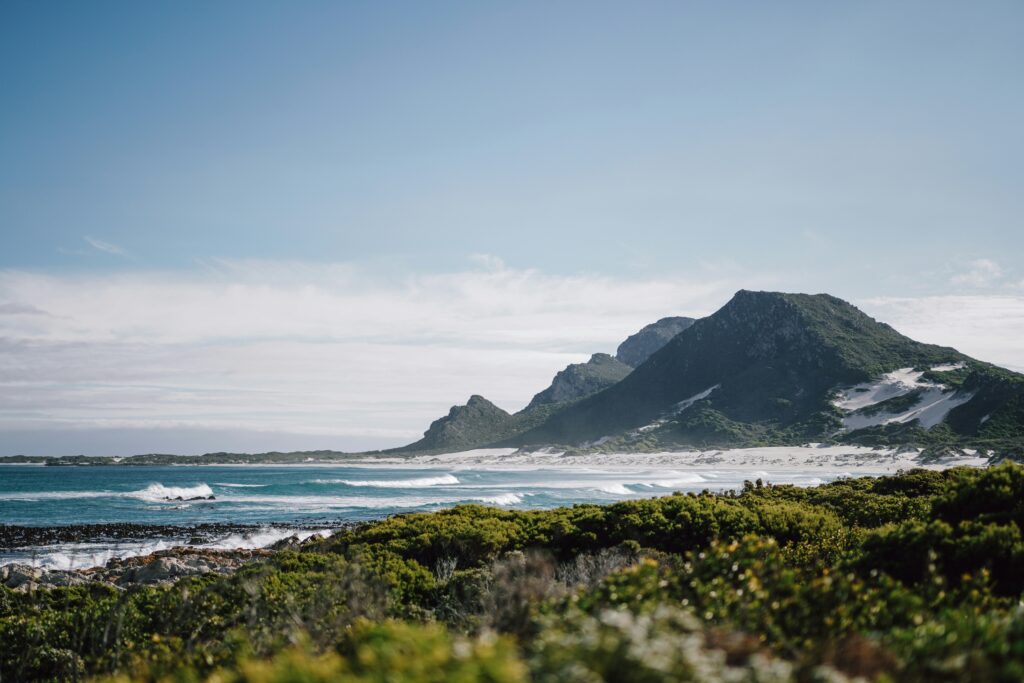
Photo credit: Dana Luig /Unsplash
ECOP South Africa Highlights
● Annual AGM took place on the 27 February 2026, please find information here
● Several upcoming webinars and seminar for 2026 (please register below more information)
● Join our social media platforms
● Annual AGM taking please 27 February @12h30 ZOOM
● Several upcoming webinars and seminar for 2026
How to join the ECOP South Africa Node
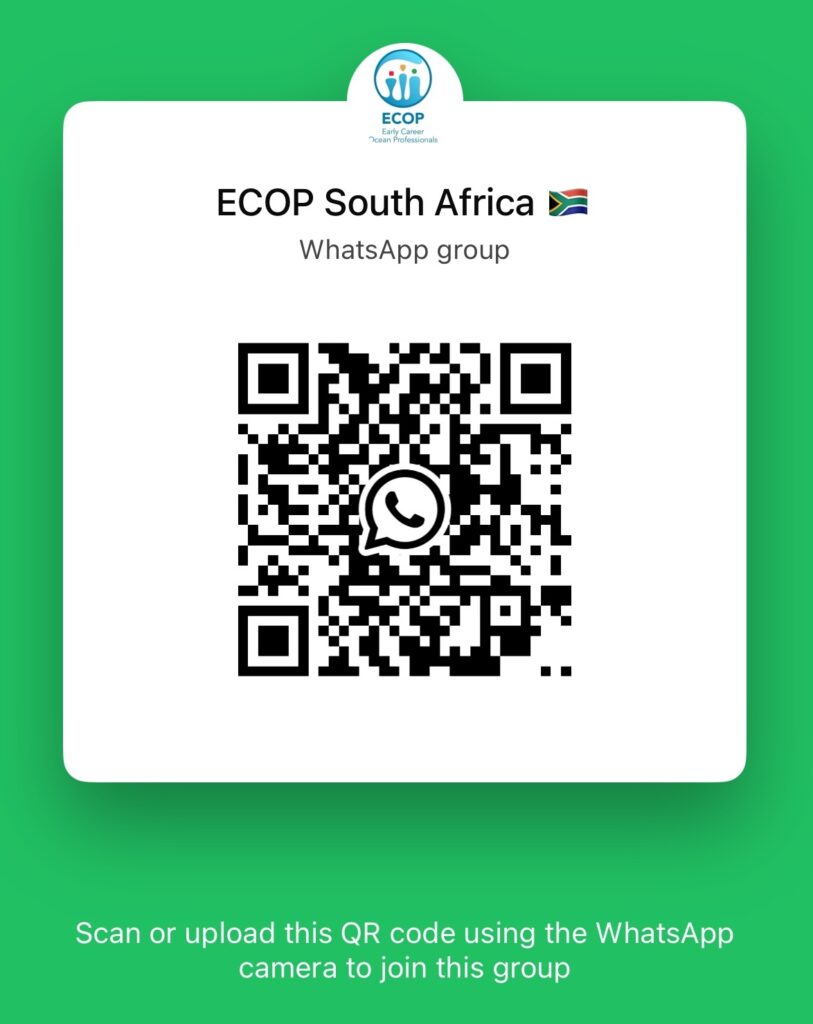
Join the ECOP South Africa Node WhatsApp Group
ECOP South Africa Coordination Unit
Contact us: southafrica@ecopdecade.org

Brishan Kalyan
Affiliation: South African Environmental Observation Network, Institute of Coastal and Marine Research, Nelson Mandela University.
I specialise in phytoplankton ecology and taxonomy, remote sensing and barcoding. My professional goals and aspirations within the UN Ocean Decade are to contribute to the use of the vast amounts of data gathered in understanding and sustainably using the ocean, reduce pollution and assist in providing measures to build a non-consumerist economy and society. ORCID: 0000-0001-8359-346X.
Brishan is currently a co-lead in the Node Coordinator portfolio.
Contact details: brishanrhk@gmail.com.

Mia Strand
Affiliation: Nippon Foundation Ocean Nexus, Institute of Coastal and Marine Research, Nelson Mandela University.
I am a postdoctoral research fellow, focusing on transdisciplinary knowledge co-production processes to centre equity in ocean governance. My aspirations within the UN Ocean Decade include contributing to the development of a regional and national ocean literacies strategy, which considers a plurality of ocean literacies and knowledge systems. It is also to further the voices of South African ECOPs in international and regional fora, such as the UN Ocean Conference and the Africa Ocean Roadmap. ORCID:0000-0002-8642-1572.
Mia is currently co-coordinator in the Ocean Literacies portfolio
.Contact details: miavstrand@gmail.com.

Eugin Bornman
Affiliation: Estuarine and Movement Ecology Lab, University of Southern Mississippi, Marine and Antarctic Research for Innovation and Sustainability, University of Cape Town.
I specialise in Fish Movement Ecology and Estuarine Ecology. My professional goals and aspirations within the UN Ocean Decade involve contributing to designing and monitoring MPAs based on ecological connectivity data. Contribute to global initiatives targeting the restoration and resilience of estuarine habitats as critical nursery areas. Actively participate in initiatives to bridge gaps between research, policy, and action. ORCID: 0000-0003-1909-7108.
Eugin is currently co-coordinator in the Training, Webinars & Workshops portfolio.
Contact details: euginbornman@gmail.com.

Sina Wallschuss
Affiliation: University of Cape Town.
I specialise in biogeochemical oceanography. My aspirations within the UN Ocean Decade are rooted in addressing the pressing challenge of ocean deoxygenation — not only to advance scientific understanding, but to help ensure healthier marine ecosystems and more just, sustainable futures for the communities who depend on them. I am passionate about amplifying African ECOP voices, promoting meaningful inclusion in ocean science, and supporting interdisciplinary collaborations that advance ocean sustainability through the bridging of science, society, policy, and industry. ORCID: 0000-0002-7071-7168.
Sina is currently co-coordinator in the Social Media and Communications portfolio..
Contact details: swallschuss@gmail.com

Makwena Melita Sebone
Affiliation: Oceanographic Research Institute
I specialise in DNA metabarcoding, taxonomy and zooplankton ecology. My aspirations within the UN Ocean Decade are to contribute to inclusive and transformative ocean science that supports sustainable development and conservation. I aim to amplify the voices of ECOPs by promoting capacity building, interdisciplinary collaboration, and science communication. ORCID: 0000-0001-5729-5581.
Melita is currently co-coordinator in the Newsletter, Outreach & Recruitment portfolio. Contact details: markwenah@gmail.com

Margaretha Burger
Affiliation: Nelson Mandela University and South African Environmental Observation Network (SAEON).
I am a final-year Master’s student specialising in zooplankton ecology, marine biodiversity monitoring, and the optimisation of analytical techniques for plankton research. With a background in zoology, my work supports the development of efficient, high-quality methods for understanding marine ecosystems. I am passionate about fostering diversity, equity, and inclusion in ocean science, believing that a broader range of voices and perspectives is essential for innovative and impactful marine research. My professional goals within the UN Ocean Decade include advancing sustainable ocean use, promoting inclusive scientific practices, and fostering equitable participation in marine research. ORCID: 0000-0003-2005-6979
Margaretha is currently co-coordinator in the Diversity, Equity and Inclusion portfolio. Contact details: margaretha.burger.m@gmail.com

Mishka Rawatlal
Affiliation: University of Cape Town, Marine Biogeochemistry Laboratory
I have a background in analytical chemistry and a specialization in ocean and atmospheric science. I’m currently pursuing my PhD, where my research focuses on the sources and dynamics of water-soluble organic carbon and nitrogen aerosols at Cape Point. My work combines field observations, instrumental analysis, and data-driven methods to better understand how aerosol chemistry interacts with biogeochemical cycles and climate change. Beyond the lab, I am committed to science communication and education. I believe that making scientific knowledge accessible and engaging is crucial for addressing the challenges we face globally. I’m driven to bridge the gap between science and society, and to help inspire the next generation of scientists through inclusive and effective communication. ORCID: 0000-0001-9310-3559
Mishka is currently co-coordinator in the Training, Webinars, and Workshops portfolio.
Contact details: mishka.rawatlal@gmail.com

Tayla Gifford
Affiliation: Institute of Coastal and Marine Research, Nelson Mandela University
I specialise in marine conservation, with a focus on endangered seabirds, MPAs (marine protected areas) and ALDFG (abandoned, lost or otherwise discarded fishing gear). I completed my MSc and have since worked within the non-profit conservation sector in South Africa. While rooted in biological sciences, my work has emphasised the interconnectedness of nature and society, and the need to weave social sciences into all aspects of conservation. I am passionate about knowledge-sharing and engaging others through writing, workshops and presentations. Within the Ocean Decade, my aspiration is to contribute to protecting ecosystems and biodiversity, promoting sustainable fisheries, reducing marine pollution, and strengthening connections between people and the ocean.
ORCID: 0000-0002-5307-6581
Tayla is currently co-coordinator in the Newsletter, Outreach & Recruitment portfolio.
Contact details: tayla.gifford30@gmail.com

Khotso Mogotlane
Affiliation:Hotlane Organization and Country Lead for Esgenetique Corporate Solutions
Khotso is an environmental and sustainability advocate. As founder of the Hotlane Organization and Country Lead for Esgenetique Corporate Solutions South Africa, he leads circular economy projects and youth-centered climate action. He hosts Africa’s Leaders in Sustainability on Vuka Online Radio, amplifying voices in conservation and innovation.
Through his work with the UN Ocean Decade, Khotso connects underserved communities with scientists, mobilizing local knowledge and data collection to advance marine conservation, strengthen research, and build resilient ecosystems across Africa’s coastal and urban landscapes.
Khotso is currently co-coordinator in the Training, Webinars, and Workshops portfolio.
Contact: climate@hotlane.org

Melissa Cairns
Affiliation: PRDW (Coastal Engineering Firm)
Melissa holds a BEng in Civil Engineering and an MEng in Port and Coastal Engineering from the University of Stellenbosch. She joined PRDW as a graduate coastal engineer intern and has since been promoted to an engineer. Her work involves the design of coastal protection structures, such as revetments, seawalls, breakwaters, and scour protection, as well as site inspections, proposals, port planning, environmental engineering, and navigation and vessel studies. Melissa’s aspirations within the UN Ocean Decade include advancing sustainable coastal infrastructure and improving coastal resilience, while ensuring environmentally sound engineering practices to safeguard coastal communities.
Melissa is currently co-coordinator in the Ocean Literacies portfolio.
Contact: mcairns321@gmail.com

Palesa (Palisa) Ntsala
Palesa Ntsala is an environmental professional dedicated to reconnecting people with nature, with a particular focus on protecting oceans and supporting coastal communities. She believes it is essential for ocean professionals to integrate Traditional Indigenous Knowledge with scientific approaches to create balance and inclusivity in ocean stewardship. Recognising Indigenous peoples as the original custodians of the environment, she advocates for reciprocal learning, where both Indigenous knowledge holders and scientific experts share and benefit from each other’s insights.
With a background in applying Circular Economy principles, Palesa uses education as a tool to promote ocean sustainability. She emphasises intentional collaboration between diverse stakeholders, often those who do not traditionally work together, as a critical pathway to driving meaningful change, fostering equity, and amplifying collective impact.
Palesa is currently co-coordinator in the Diversity, Equity and Inclusion portfolio
Contact: palisantsala@gmail.com

Zara Sanya Prew
Affiliation: University of Cape Town and South African Environmental Observation Network (SAEON).
I specialise in using field observations and remote-sensing data to examine how climate change is reshaping coastal ecosystems, with a particular focus on South African kelp forest systems. I have a background in environmental policy and am particularly interested in the intersections between science, governance and public engagement for more effective ocean management. A Level 5 Commercial Diver, I have experience in marine field research and recently founded ‘Swim for Trash’, a community-based initiative in Cape Town that raises awareness about marine pollution through direct action and storytelling. Within the UN Ocean Decade, I aim to contribute to evidence-based, community-led approaches that strengthen coastal ecosystem stewardship and connect scientific knowledge with societal needs
ORCID: 0000-0002-1661-3069
Contact: zaraprew@gmail.com
Zara is currently co-coordinator in the Social Media and Communications portfolio.

Dinah Mukhari
Affiliation: South African Institute for Aquatic Biodiversity, Department of Ichthyology and Fisheries Science, Rhodes University.
Expertise: Estuarine connectivity, movement ecology, fish biology
Professional goals and aspirations within the UN Ocean Decade: My professional goal is to advance integrative, policy-relevant marine and estuarine science that strengthens ecological connectivity knowledge and supports sustainable ocean governance in line with the objectives of the UN Decade of Ocean Science for Sustainable Development (2021–2030). As an early-career scientist working at the interface of fish ecology, climate sensitivity and habitat connectivity, my research seeks to generate actionable evidence on how mobile coastal species respond to environmental variability and anthropogenic pressures across seascape gradients.
Resources/Links
- African Network of Deep-Water Researchers: https://challenger150.world/african-network-of-deep-water-researchers/
- Our host, the Institute for Coastal and Marine Research: https://cmr.mandela.ac.za/
- SAEON Elwandle Coastal Node: https://smcri.saeon.ac.za/
- Ocean20, G20 South Africa: https://g20.org/track/ocean-o20/