REGIONAL NODE -
CENTRAL AMERICA
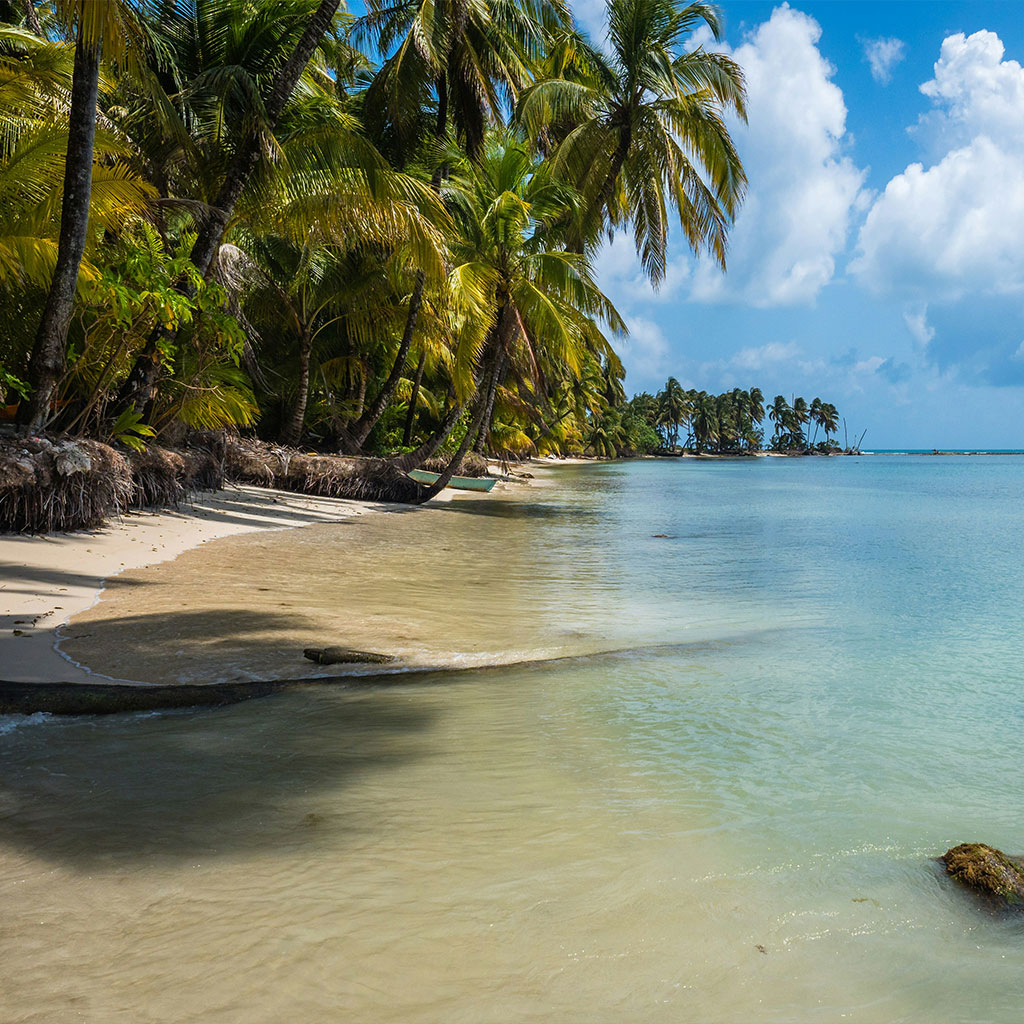
Photo credit: Zeynep Gökalp/Unsplash
Navigation panel
Introducing ECOP Central America
ECOP Central America aims to empower and showcase the contribution of Central American ECOPs to the UN Decade visible at the local, regional, and international levels through network-building and knowledge-sharing.
Who is a Central American ECOP?
We welcome every Central American citizen or resident that self-identifies as being within 10 years or less of experience in any ocean-related occupation (not necessarily paid), it does not matter if you are currently working somewhere else in the world.
What’s our vision?
- Raise awareness and disseminate the importance of the ocean at a regional scale
- Promote cross-sectoral knowledge exchange and cooperation between Central American ocean professionals and organizations to promote interdisciplinarity
- Increase the representation of the Central American ECOPs in the regional and international scape
- Provide mentoring to Central American ECOPs for career building
- Strengthen the cooperation with other Latin American regions such as Mexico, South America, and the Caribbean
- Create strong regional and international networks and bonds that transcend the UN Ocean Decade.
Meet ECOP Central America
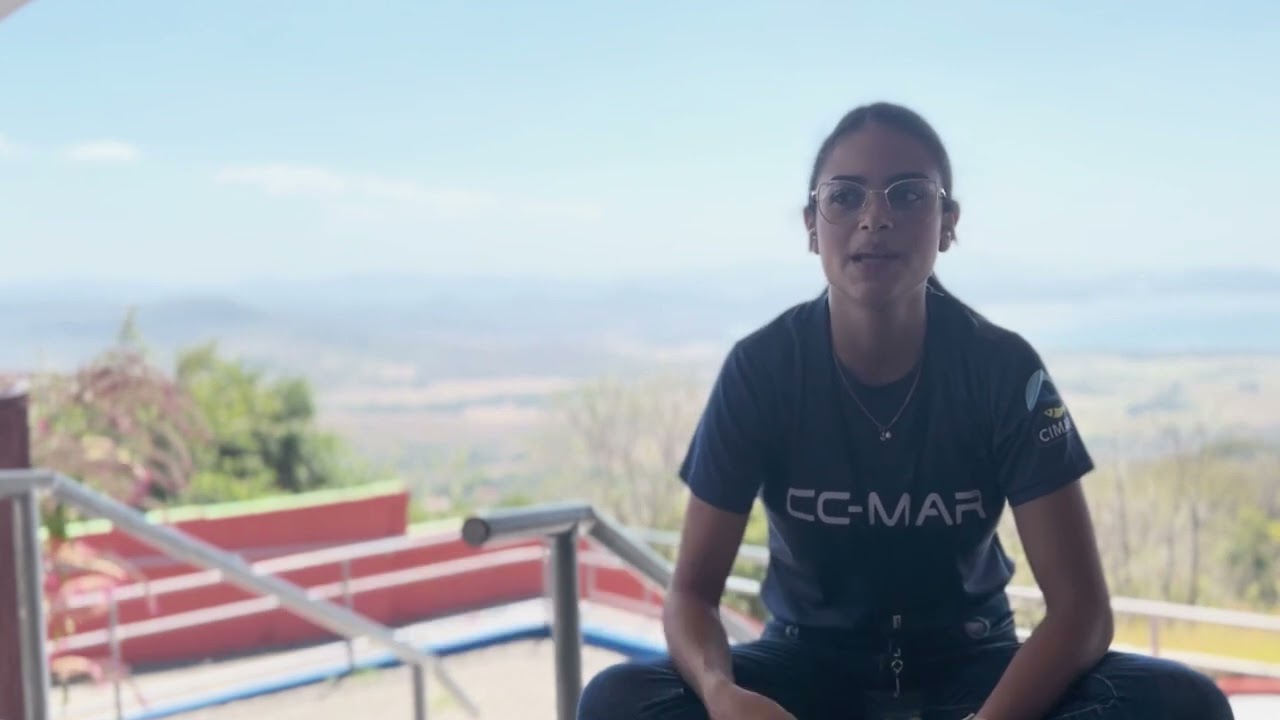
Hear what the ECOP Central America Node has been up to from regional coordinator Xochitl Elias. She talks about the challenges of ECOPs in the region, such as access to funding, lack of networks of ECOPs, language barriers, and limited mentorships. Xochitl also discusses what activities her team is running and what plans they have.
Want to join?
We welcome every Central American ECOP to join our network to receive more information on any regional and international activities and opportunities. Join our social channels on instagram and facebook. Download our digital flyer here (in Spanish).
For any enquiries, please contact: central_america@ecopdecade.org
Our plans
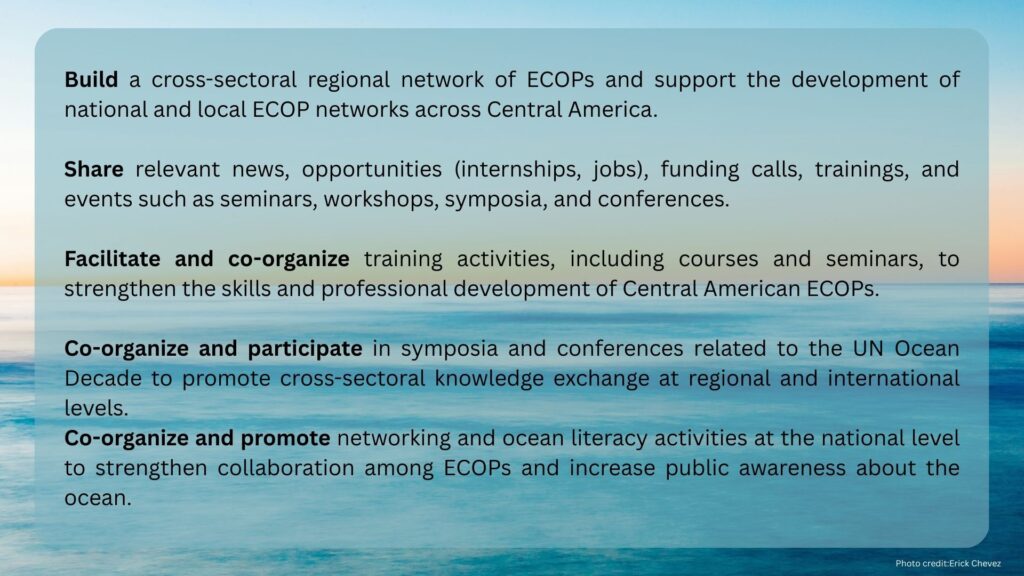
- Create a cross-sectoral regional network of ECOPs and facilitate the creation of further regional networks
- Identify the regional barriers and needs of ECOPS through a Latin American survey
- Facilitate opportunities (internships, jobs, conferences, research stays, training) by building up a network of institutions, NGOs, industries, and funding options and creating a map to visualize their location in the region
- Disseminate relevant news, opportunities (internships, jobs), training, events (seminars, workshops, symposia), and funding opportunities
- Facilitate the training of Central American ECOPs to increase their opportunities and participation in the international landscape
- Organize monthly seminars given by Central American ECOPs, mentors, or invited speakers to share the work, expertise, and experiences
- Organize training and symposia related to the UN Ocean Decade that will allow for cross-sectoral knowledge exchange among the Central American countries
- Organize national outreaching initiatives to involve citizens in ocean conservation
- Work in collaboration with other Latin American regions, including Mexico, South America, and the Caribbean
Xochitl Édua Elías Ilosvay
Central America coordinator
Xochitl is an interdisciplinary ECOP fascinated with how humans interact with the ocean and the opportunities to create a sustainable, just, diverse, and inclusive relationship. She is currently pursuing her Ph.D. at the University of Vigo.
Andrea Herrera
Capacity Development Coordinator
Andrea is an interdisciplinary scholar in her second year of joint master’s in marine environment and resources and an advocate for women in science fields. Her research area currently focuses on the study and development of identification methods for migratory species of blue sharks in the mid-Atlantic. She is passionate about interlinking conservation, marine policy, and the inclusion of communities in decision-making.
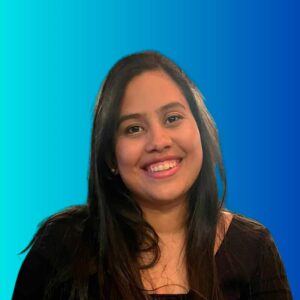
Juliana Di Filippo Taborda
Central America intern
Juliana is a biologist (MSc. in Marine Resource Management) who’s passionate about the ocean with an especial interest in marine animals ecology and management, sustainability and the empowerment of the human coastal communities through interdisciplinary projects including environmental education and science communication.
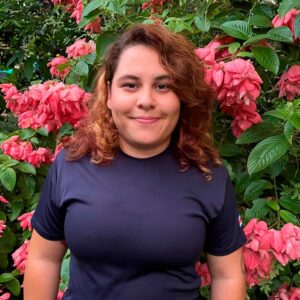
Fernanda Ramos
Central America communications team
Fernanda is a biologist with more than 5 years of experience working on coral and rocky reefs in my country. Since her beginnings in marine biology, she has focused on knowing the dynamics of marine ecosystems from the biological and ecological part, working with the different groups that compose them. She currently focuses on the study of reef echinoderms (starfish and their relatives).
Juliana Corrales
Central America communications team
Juliana is an ocean advocate with a passion for bringing people closer to the ocean. She’s built on her 10+ years of experience as a graphic designer and communicator with an MA in Sustainable Natural Resource Management and has worked developing a behavioural design approach to marine conservation. Uniting creativity with ocean conservation.
Central America National Nodes
Costa Rica
Diego Fallas Madrigal
Costa Rica coordinator
Diego is a biologist with preparation in ecology, sustainable development and natural resources management, but mainly involved in marine biology studies where he leads and collaborates in national, regional and global projects. With his efforts he is supporting the understanding of sharks, rays and bony fishes abundance and spatial distributions. He is currently starting his Master’s studies at the University of Costa Rica (UCR).
Felipe Alfaro
Costa Rica coordinator
Felipe is a passionate coastal engineer (MSc. Coastal and Ports Engineering-University of Cantabria) who works as a researcher in the Laboratory of Maritime Engineering of the University of Costa Rica (IMARES-UCR). His current research interests lie in the numerical modeling and analysis of waves propagation focused on projects related to wave climate forecasts for downtime analysis in ports, design of coastal protection infrastructure, nature-based solutions and climate change.
El Salvador
Laura Figueroa
El Salvador co-coordinator
Laura is enthusiastic about marine life and its conservation and currently finishing her Bachelor’s Degree in Biology at the University of El Salvador. She also engages in science communication and raising awareness about the importance of the oceans in El Salvador.
Michelle Constanza
El Salvador co-cordinator
Michelle, a Bachelor’s student at the University of El Salvador, is passionate about reef ecology and specializes in environmental toxicology. Currently, she is researching mercury levels in ray tissue along the coast of El Salvador, contributing to marine conservation efforts.
Sarai Paiz
El Salvador co-coordinator
Sarai graduated with a degree in Biology from the University of El Salvador. In her studies, she developed a particular interest in molecular biology and its application to species conservation and geometric morphometry of batoids. She is currently working on analyzing the morphometry of Pacific white-spotted eagle rays off the coast of El Salvador.
Guatemala
María Schoenbeck
Guatemala coordinator
María is a biologist working in the marine-coastal zone in the Pacific coast of Guatemala, mainly with fisheries and identifying threats, including climate change impacts on fisheries and the marine-coastal zone with the aim of creating participatory strategies for resource conservation and spatial planning. She is currently a Fellow from the Coastal Solution Program from Cornell University.
Andrea Lira Loarca
Guatemala coordinator
Andrea is a coastal scientist (PhD. in Coastal and Environmental Engineering) working on climate change effects on wave climate and extreme coastal water levels and coastal impacts. She is currently a Postdoctoral Fellow at the University of Genoa, Italy.
Honduras
Zara Guifarro
Honduras coordinator
Zara is a biologist with a master´s degree in Applied Ecology and Conservation. She has worked in different protected areas in Honduras working towards the conservation of manatees, reef fishes, and most recently corals. She is currently working with coral spawning, assisted fertilization, and building capacities in coral restoration in the Bay Islands of Honduras
Paola Diaz Canales
Honduras coordinator
Paola is a Master’s student at the University of Costa Rica (UCR). She is currently studying the spatial variability of stable isotopes of algae and parrotfish to identify the feeding habitats for the integrated management of compressor fisheries in the North Pacific of Costa Rica. She is also co-directing the research at UCR on the current status of pelagic sargassum in the Caribbean coasts of Central America.
Nicaragua
Mabel Watson
Nicaragua coordinator
Mabel studies terrestrial and aquatic ecosystems and currently works at developing inclusive, collaborative, and supportive strategies to manage marine resources and ensure the well-being of the coastal communities in the Pacific Ocean. She is in the last semester of her Bachelor’s Degree in Environmental and Natural Resources Management at the Universidad Nacional Autónoma de Nicaragua.
Panama
Luis Rodríguez Castrejón
Panama coordinator
Luis is a Panamanian biologist, with 4 years of experience working with zooplankton for environmental consulting projects. Currently, he is finishing my master’s degree (MSc. Parasitological Sciences), where he studies the effects of upwelling on the abundance of parasites in commercially important groupers. He is interested in ecological, taxonomic, and human health aspects.
Senaida Tenorio
Panama coordinator
Senaida is a Marine Biology student at the International Maritime University of Panama. She is dedicated to the protection and conservation of sea turtles, and focusing her thesis on determining the rate of mercury present in sea turtles in the Panamanian Pacific, specifically in the coast of Pedasi. She aims for this work to promote environmental education and reduce the consumption of their eggs.
REMM - Red de Especies Marinas Migratorias
Background
¿Quiénes somos?
Somos una red sin fines de lucro de profesionales del océano en inicio de su carrera (ECOPs) fundada en el 2024 con el fin de promover la colaboración entre científicos interesados en el estudio y conservación de especies migratorias en Latinoamérica.
Misión
Facilitar un espacio de colaboración para profesionales del océano en inicio de su carrera (ECOPs) interesados en la conservación de especies marinas migratorias en Latinoamérica, promoviendo alianzas e intercambio de ideas, el acceso a eventos científicos y el apoyo entre investigadores emergentes y experimentados.
Visión
Liderar la consolidación de una red intergeneracional de profesionales del océano en Latinoamérica, impulsando el intercambio de conocimientos y la colaboración científica para fortalecer el manejo y la conservación de las especies marinas migratorias y sus ecosistemas. Convertirnos en un referente en la región, integrando la ciencia con la gobernanza.
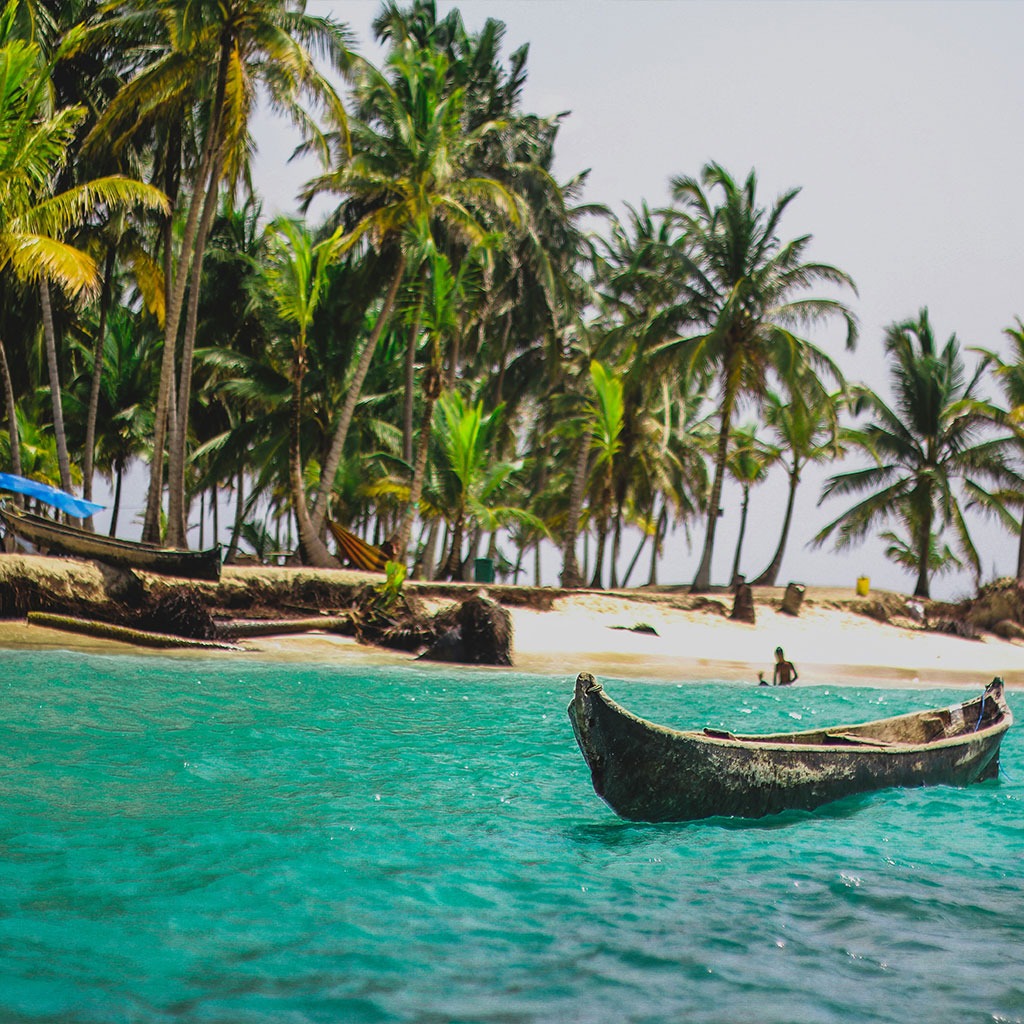
Credit: Jeremy Bishop / Unsplash
Objetivos:
- Crear una plataforma que permita el intercambio de información y la comunicación entre los miembros de la red.
- Fomentar el intercambio de conocimiento y experiencias intergeneracionales por medio de seminarios y/o talleres.
- Promover la investigación, conservación y manejo de especies marinas migratorias mediante el trabajo colaborativo de ECOPs.
- Difundir oportunidades científicas emergentes relacionadas con especies migratorias en la región, incluyendo empleos, cursos, conferencias y proyectos de investigación.
- Fomentar la educación sobre la importancia de especies marinas migratorias en Latinoamérica.
- Promover iniciativas de conservación de especies marinas migratorias para la región latinoamericana
Credit: Dmitry Osipenko / Unsplash
Who are we?
We are a nonprofit network of Early-Career Ocean Professionals (ECOPs) founded in 2024 with the goal of promoting collaboration among scientists interested in the study and conservation of migratory species in Latin America.
Our network was born in late 2024 as a collaborative initiative between ECOP Central America and Migramar. It emerged from a shared vision to create a space for ECOPs working with migratory species across Latin America
Mission
To provide a collaborative space for Early-Career Ocean Professionals (ECOPs) interested in the conservation of migratory marine species in Latin America, promoting partnerships and idea exchange, access to scientific events, and support between emerging and experienced researchers.
Vision
To lead the development of an intergenerational network of ocean professionals in Latin America, fostering knowledge exchange and scientific collaboration to strengthen the management and conservation of migratory marine species and their ecosystems. We aim to become a regional reference, integrating science with governance.
Credit: Dmitry Osipenko / Unsplash
Objectives:
Create a platform that enables information sharing and communication among network members.
- Encourage intergenerational knowledge and experience exchange through seminars and/or workshops.
- Promote research, conservation, and management of migratory marine species through collaborative work by ECOPs.
- Share emerging scientific opportunities related to migratory species in the region, including jobs, courses, conferences, and research projects.
- Promote education on the importance of migratory marine species in Latin America.
- Support conservation initiatives for migratory marine species in the Latin American region.
REMM Coordinators
Click the arrow to read the coordinator bio.
Diego Fallas Madrigal
ECOP Costa Rica
Maria Virginia Gabela Flores
Coordinadora de Comunicación y Consultora MigraMar
Team
Natalia Solís-Miranda
Andrea Herrera
Xochitl Édua Elías Ilosvay
Marta Cambra
María Schoenbeck
Nicole Chinacalle-Martínez
Viviana Páez Cordovez
CD Hub - Capacity Development Hub
About the Hub
The Central America Capacity Development Hub was born after noticing the gaps currently existing at the regional scale. It provides an excellent opportunity for centralizing efforts for ECOPs in Central America, where they are able to co-design, share, and collaborate through seminars, training sessions, and mentoring. This initiative enables Central American ECOPs access to information and accessible knowledge, helping bridge national, regional, and global barriers.
The Capacity Development Hub ECOP Central America will provide capacity, skills, and knowledge for enhanced ocean observation, policy, and conservation. We welcome regional NGOs, governmental institutions, the school system, or the local community to collaborate in expanding knowledge for initiatives that help reduce barriers among underrepresented groups.
Credit: Amanda Cotton / Ocean Image Bank
Goals and Objectives
Closely aligned with the overall objectives of the ECOP Central America Node, this hub aims to provide opportunities related to capacity in the region. Overall, we aim to unify and promote cross-collaboration in the region, making information accessible 4 all, and supporting ECOPs in the area to elevate their representation and inclusion in the Ocean Decade’s agenda.
The Capacity Development Hub especially seeks to:
- Seminars about key themes relevant to the region.
- Short online or in-person training courses/modules in data analysis, ocean literacy, ocean policy, and science communication.
- Events and Symposia: showcasing current topics of high interest in Central America and globally.
- Tailored mentoring programs.
Focus Areas:
- The development of seminars about key themes relevant to the region and early-career researchers.
- Online or in-person training courses/modules in Ocean Science, Ocean Literacy, Ocean Policy and Equity, and Science Communication.
- Events and Symposia showcasing current topics of high interest in Central America and globally.
- Tailored mentoring programs that support and strengthen ECOP’s capacity-building.
Past Cources
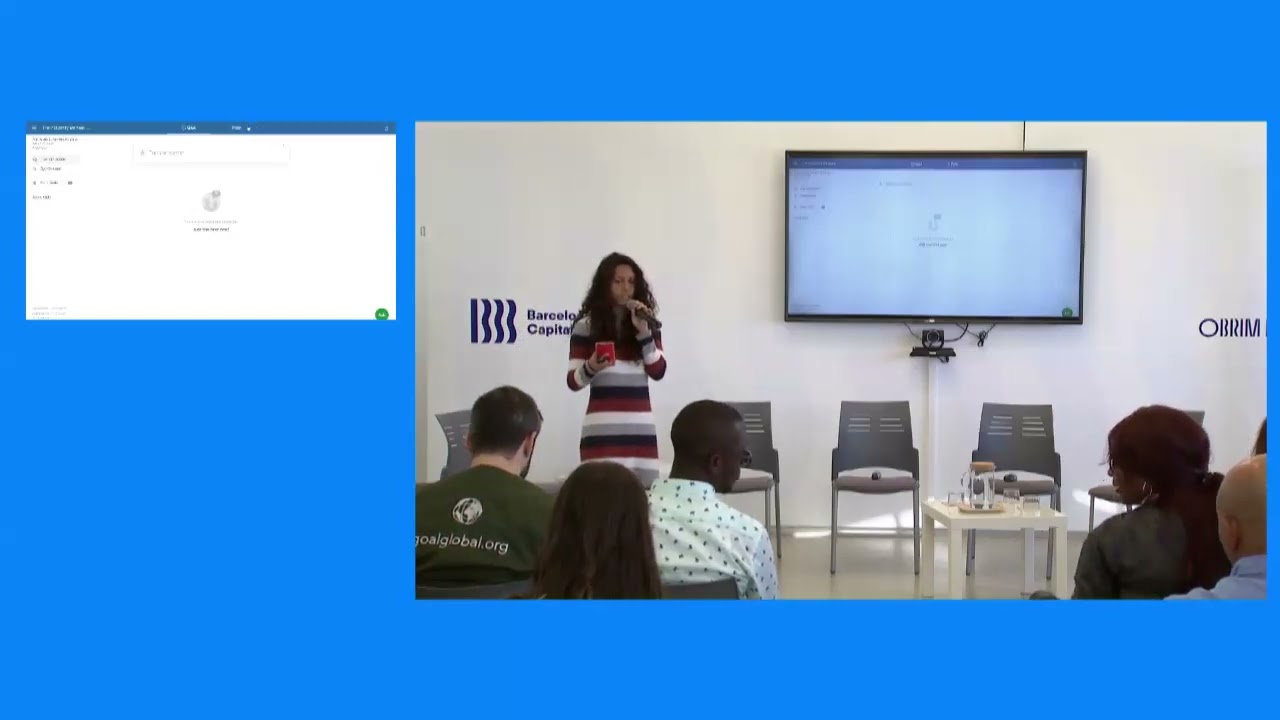
This course introduced learners to the Python programming language and software environment.
Learn more: Central America online course report
Number of participants: 32
Watch The Past Monthly Webinar Series Central America
Highlights
2022
- Launching of the node: the regional node is formed in September 2022 as a result of the programme’s presence at the ICES PICES ECR conference in Newfoundland, Canada. The node is composed of six Central American countries: Guatemala, Honduras, El Salvador, Nicaragua, Costa Rica and Panama. Belize was not included in this node due to linguistic and cultural differences and its membership in the Caribbean Community (CARICOM).
2023
- ECOP Guatemala coordinators, together with Sustainable Ocean Alliance Guatemala visited the Peace Boat (MV Pacific World) and a screening of the documentary “Deep Rising”, where a forum with experts on the topic of underwater mining was present to discuss the topic with the public.
2024
- Honduras Hosts First Coastal Marine Symposium Led by ECOP Honduras: the first-ever Coastal Marine Symposium in Honduras took place at the National Autonomous University of Honduras’ (UNAH) TEC campus in Tela. The symposium was led by ECOP Honduras coordinators, Paola Díaz and Zara Guifarro, in collaboration with UNAH and the Honduran researchers: Celeste Diaz, Marcela Garay, and Julio San Martin. This academic and research-focused event was dedicated to promoting marine science and research in Honduras, uniting experts, students, NGOs, government representatives, and Early Career Ocean Professionals (ECOPs) committed to studying and conserving Honduras’ coastal and marine environments. Read more about the Symposium here
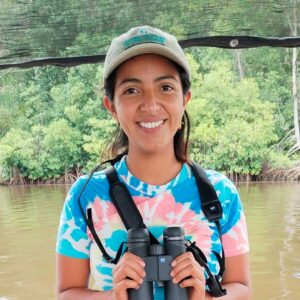
- The Marine Migratory Species Network is launched, driven by the alliance between ECOP Central America and MigraMar. This network was created so that scientists in the early stages of their careers in ocean sciences can connect, exchange knowledge, and collaborate with Spanish-speaking colleagues in Latin America focused on migratory marine species.
2025
- Representation at the One Ocean Science Congress and UNOC-3: The participation of our Central American node in both conferences marked a significant step forward. Coordinators and delegates took active roles in discussions about ocean literacy, capacity development, and regional inclusivity. Their presence helped spotlight the vital contributions that Central American ocean professionals are making to the Ocean Decade and to the broader fight for a healthier, more equitable ocean. Read more about their perspective in this article
2026
- Mes Azul is a synergy created between ECOP Centroamérica and Academia del Oceano with experts across Latin America, and welcoming ECOPs beyond the Central America region to learn about different ocean topics fundamental to the region. Learn more about this initiative here
Get in Touch
If you have any questions or inquiries, or are interested in helping and contributing to our regional working group for Capacity Development in Central America, please contact us at: capacity.development_centralam@ecopdecade.org
Lead Coordinator: Andrea Herrera
Andrea is an interdisciplinary scholar and an advocate for women in science and language inclusion. Her most recent project involved developing and testing a methodological study on photo-identification for migratory blue sharks in the mid-Atlantic. She believes that a holistic approach, although it is the longer route, is the only effective way forward. Striving to interlink shark, science, and social equity in ocean governance, emphasizing cross-sector collaboration in policy-making. All in advancing science and community-based solutions for the ocean we want.