National Node -
Australia & New Zealand
Photo credit: Victor hM0jUUU5eDg & Kyle Myburgh / Unsplash
Introducing the ECOP Australia & New Zealand National Node
The vision of the United Nations Decade of Ocean Science for Sustainable Development (2021-2030) (the ‘Ocean Decade’) is ‘the science we need for the ocean we want’. The Ocean Decade provides a global framework for scientists and stakeholders from diverse sectors to co-design and co-deliver the scientific knowledge needed to inform decision-making and deliver science-based solutions to achieve the 2030 Agenda.
Established in 2024, ECOP Australia & New Zealand is the National Node of the UN Ocean Decade Early Career Ocean Professionals (ECOP) Networking Programme for ECOPs based in or originating from Australia and New Zealand. We collaborate with the wider, global ECOP Programme, serving as its focal point in the region. We also disseminate relevant information to local ECOPs, provide them with development opportunities, and serve as a pipeline to support individuals from early engagement through to leadership roles.
For the purpose of the ECOP Programme, an ECOP is a person that self-identifies as being early in their career, within 10 years or less of professional experience in any field related to the ocean. This definition includes post-secondary students and any volunteer roles, so not only employed/paid positions. The term ‘professional’ is used to be inclusive of professionals from various sectors of society.
Vision
ECOP Australia & New Zealand aims to connect and empower ocean professionals and advocates across Australia and New Zealand, fostering a diverse and multidisciplinary community dedicated to making a difference in protecting our shared ocean. Our main aspiration is to cultivate and support ocean leaders who will drive transformative change for a healthy ocean and resilient communities. We strongly support a diverse member base, including individuals who self-identify as belonging to underrepresented groups in STEM, and particularly encourage those who belong to and/or work with Traditional Owners | Aboriginal and Torres Strait Islanders | Māori custodian groups and communities to become members!
Mission
Our mission is to support the personal and professional development of ECOPs based in or originating from Australia and New Zealand. Through various avenues, including capacity building, co-creation, and networking, we are committed to equip and empower ECOPs to make the impact they aspire to. We envision the Australia & New Zealand Node as a pipeline for career development, leadership experience, and impactful actions.
Objectives
To achieve our mission, we have set out the following objectives:
- Needs Assessment: Evaluate and update (as often as required) the specific needs, priorities, and challenges of ECOPs originating from or based in Australia and New Zealand, report these back to the membership, and actively seek solutions.
- Strengthening the ECOP Australia & New Zealand Network: Build a diverse group of ECOPs while cultivating relationships with key strategic partners across Australia and New Zealand, including research institutions, industry groups, governmental bodies, NGOs, and indigenous organisations, among others.
- Engagement, Networking, and Knowledge Sharing: Create opportunities for networking and knowledge sharing between ECOPs within the Node and with the Global ECOP network through various platforms and events, including virtual and in-person gatherings.
- Capacity Building: Create and promote development opportunities for our members through online webinars, in-person training, workshops, and other professional activities, as well as strive to inform them of external opportunities (e.g., the ECOP Programme Opportunities Database).
- Enhance cross-sectoral cooperation: Create opportunities for ECOPs in academia, industry, philanthropy, government, and indigenous communities to work together to fulfill the goals and needs of ECOPs in the region and to advance the Ocean Decade’s vision of ‘the science we need for the ocean we want’
- Implement a leadership pipeline: Help develop a cohort of ocean leaders through progressive involvement with the ECOP Node. We start with (1) an initial engagement for ECOPs to discover opportunities and connect with peers, then (2) facilitate skill-building through training, collaboration, and mentoring, follow with (3) a call to participate in projects and initiatives and to represent the Node at conferences, and (4) provide the opportunity to develop and lead activities, including by joining the Node’s coordination team. These steps are designed to ultimately facilitate the transition of ECOPs into Node leadership and impactful roles across all ocean sectors.
- Champion ECOPs: Support the professional promotion of ECOPs from or residing in Australia and New Zealand via Node-specific and Global ECOP campaigns.
- First Nations Partnership and Leadership: Promote and integrate Aboriginal, Torres Strait Islander, and Māori knowledge, perspectives, and leadership in ocean science and management. Foster meaningful partnerships that respect and uplift traditional ecological knowledge, spiritual, and cultural practices related to the ocean.
Join ECOP Australia & New Zealand
- Network purposefully.
- Learn about (inter)national opportunities (conferences, events, jobs, funding, etc).
- Access, create, and promote UN Ocean Decade-relevant ECOP content.
- Take part in or help create professional development activities.
- Collaborate with peers and partners across ocean sectors
- Grow from participant to leader through a structured pathway of engagement, contribution, and leadership opportunities within the Node
- Be highlighted among and beyond the community.
- Advance your career and impact.
Membership survey report
Coming soon!
Career corner - ECOP profiles
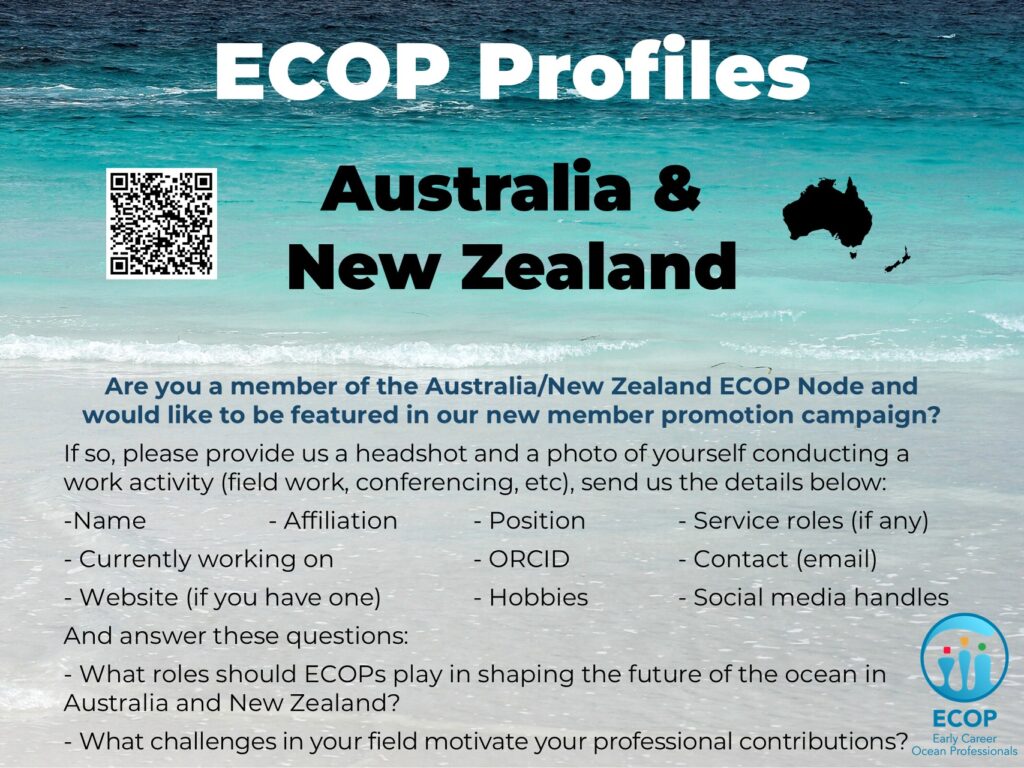
Get in touch with us if you want to be featured on this page and on our Instagram account!
Upcoming events
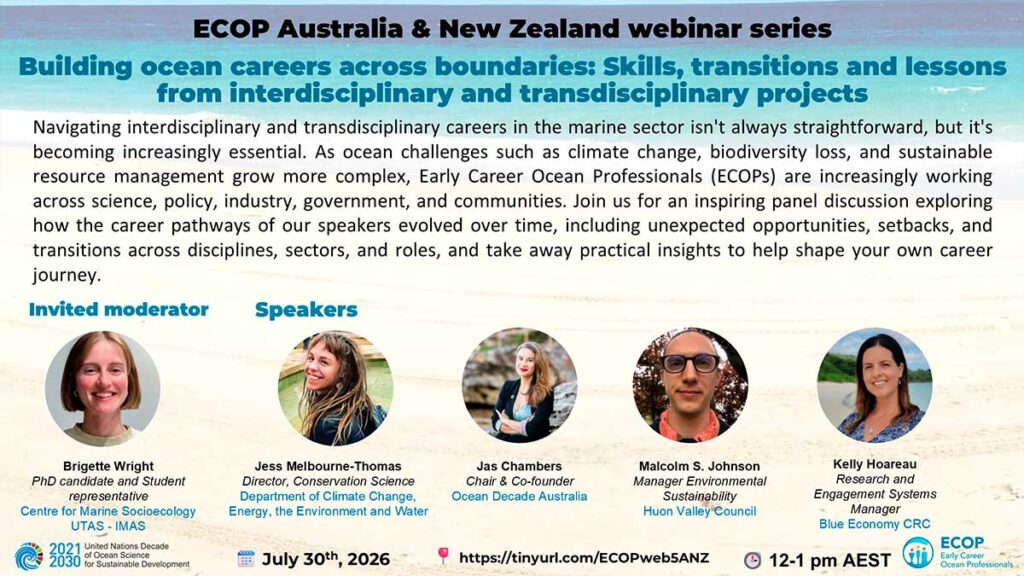
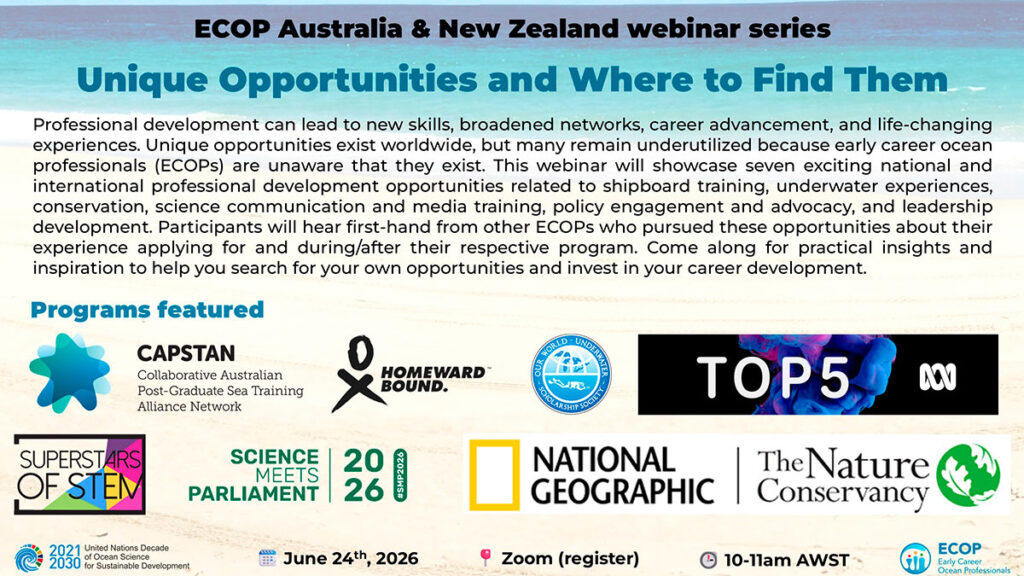
24 June 2026 (virtual): ECOP Australia & New Zealand Webinar Series Episode #4 – Unique Opportunities and Where to Find Them. Register here to attend
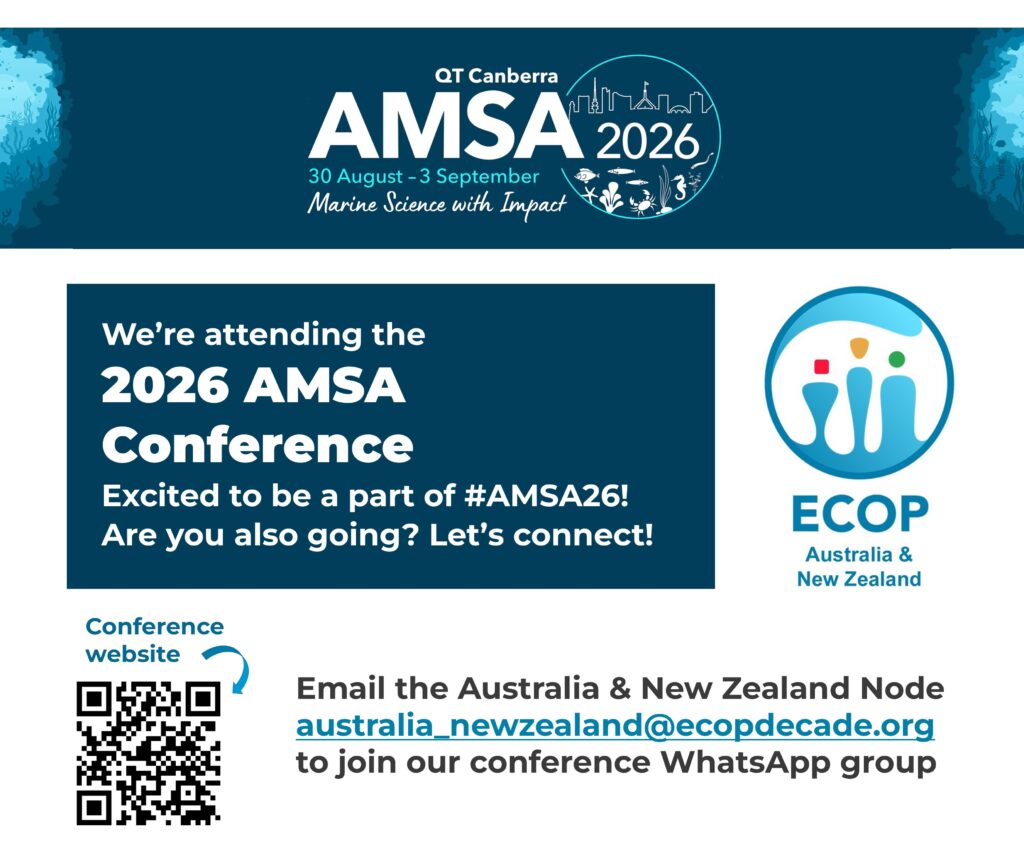
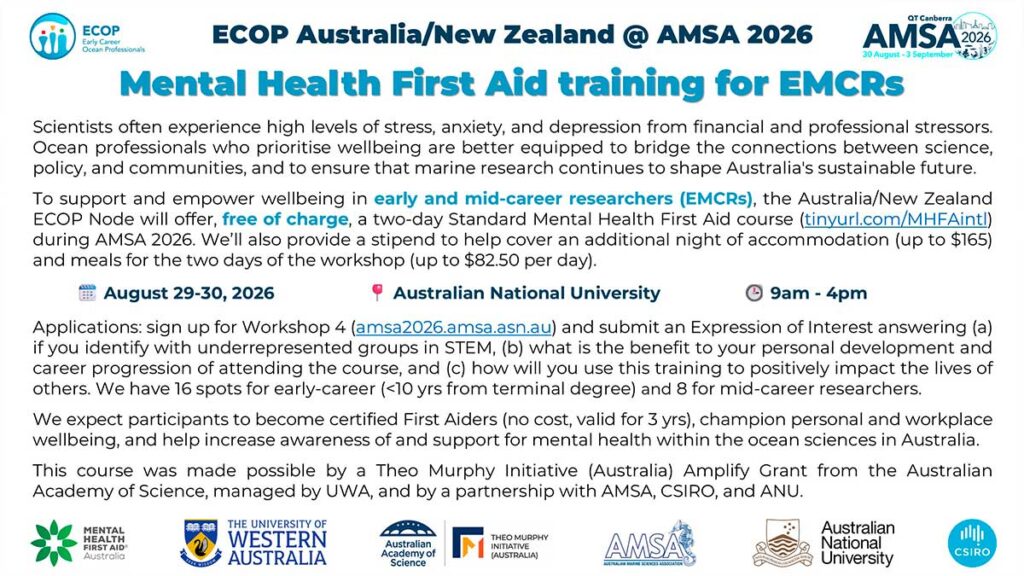
29-30 August 2026 (in-person): Mental Health First Aid training for early- and mid-career researchers (AMSA2026 Workshop #4). Applications received by June 12th have been notified of their outcome; applications received after this deadline will be reviewed as received (i.e., first come first serve) until all available spots are filled.
ECOP Australia & New Zealand Highlights
27 May 2026
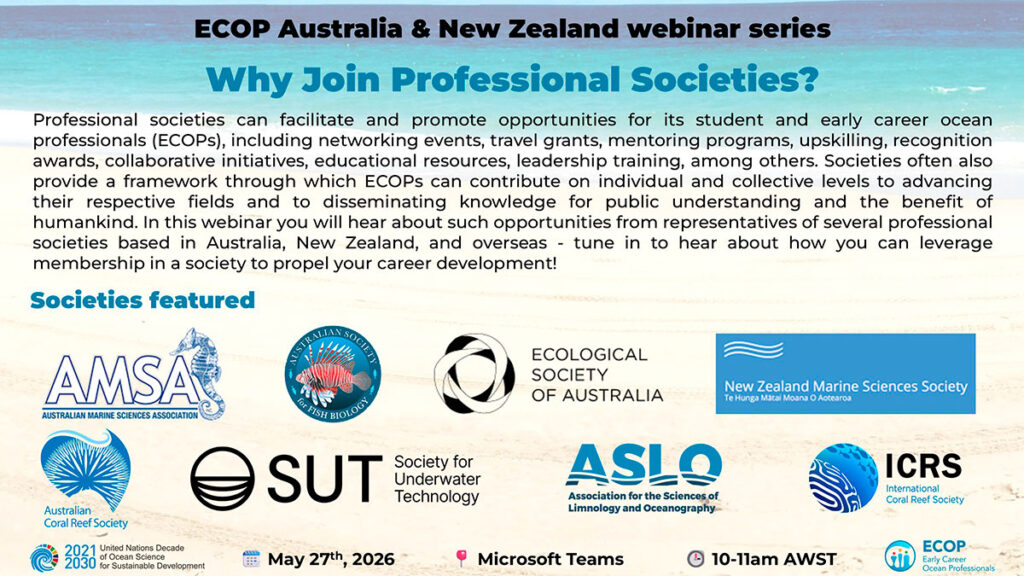
You can watch the recording of the Webinar Series Episode #3 – Why Join Professional Societies? with Dr Paula Cartwright (Australian Marine Sciences Association), Dr Tanika Shalders (Australian Society for Fish Biology), Dr Jacinta Humphrey (Ecological Society of Australia), Dr Jodie Rummer (Australian Coral Reef Society), Ms Brooke Ellis-Smith (New Zealand Marine Sciences Society), Dr Mark Casey (Society for Underwater Technology – Perth branch), and Dr Rita Franco-Santos (Association for the Sciences of Limnology and Oceanography) on the ECOP Australia & New Zealand Playlist in the ECOP YouTube Channel.
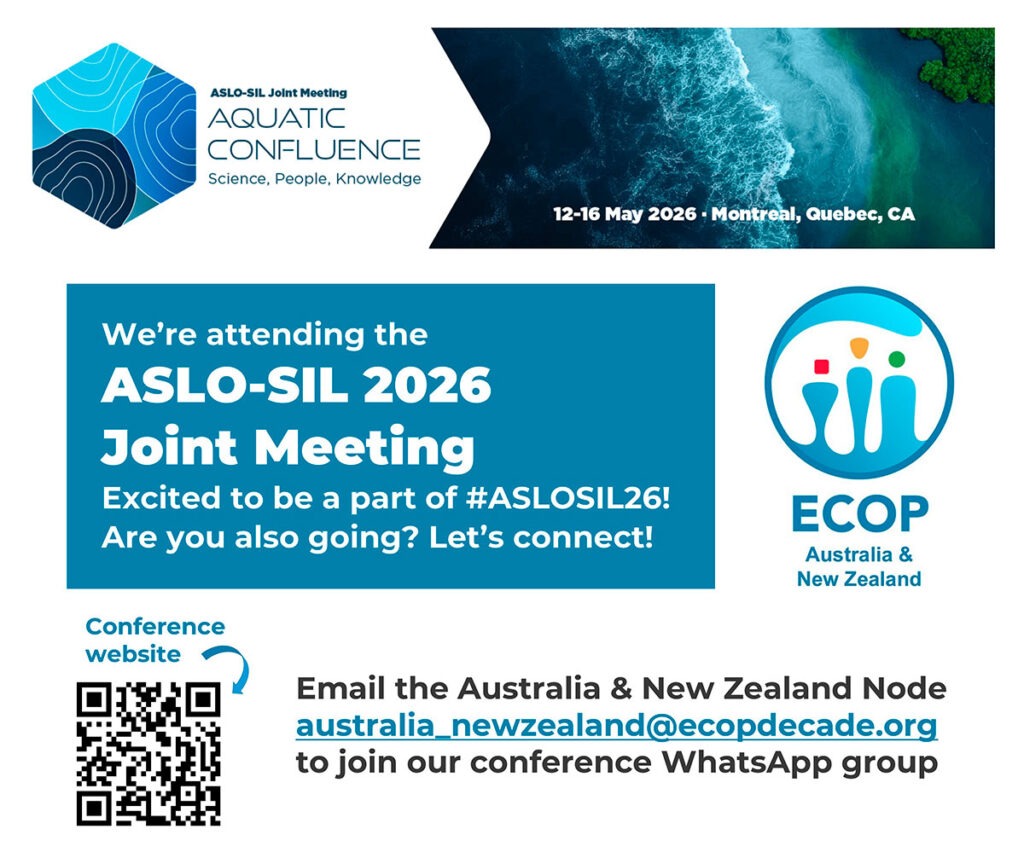
12-16 May 2026: ASLO-SIL Joint Meeting (Montreal, QC, Canada)
ECOP Australia & New Zealand was represented during the 2026 Joint Meeting between ASLO and SIL in Canada.
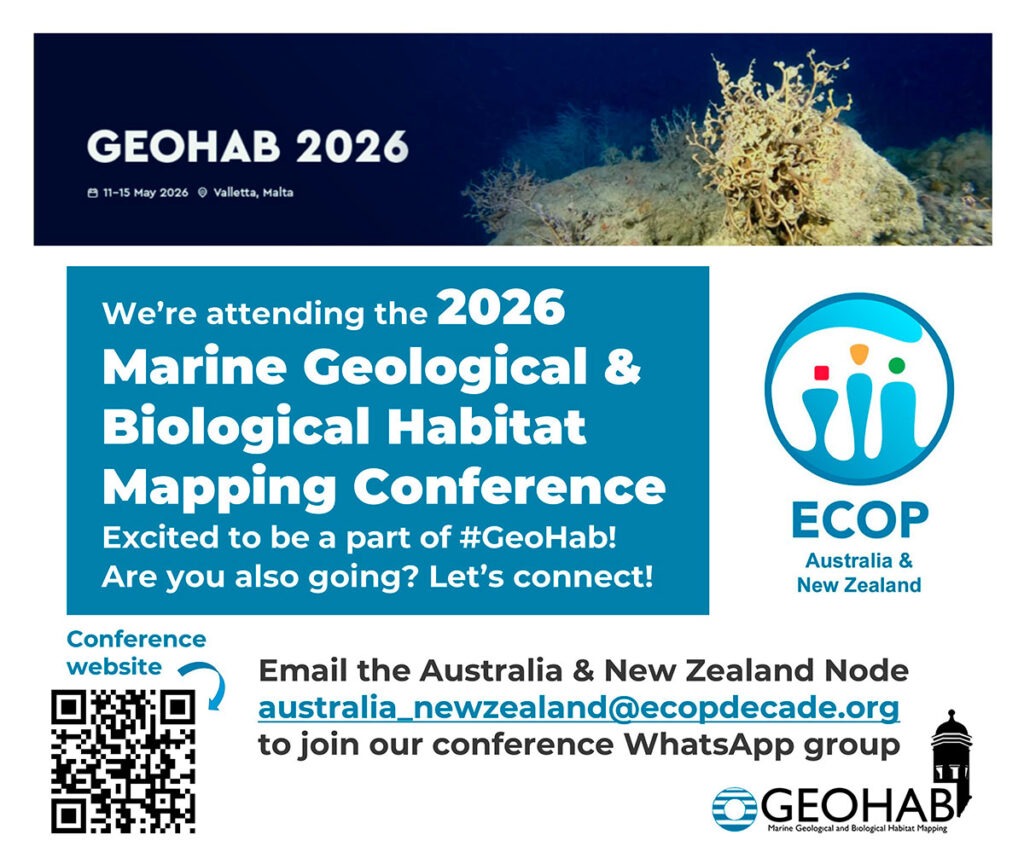
11-15 May 2026: GeoHab Conference (Valletta, Malta)
ECOP Australia & New Zealand was represented during the 2026 Marine Geological and Biological Habitat Mapping Conference in Malta.
29 April 2026
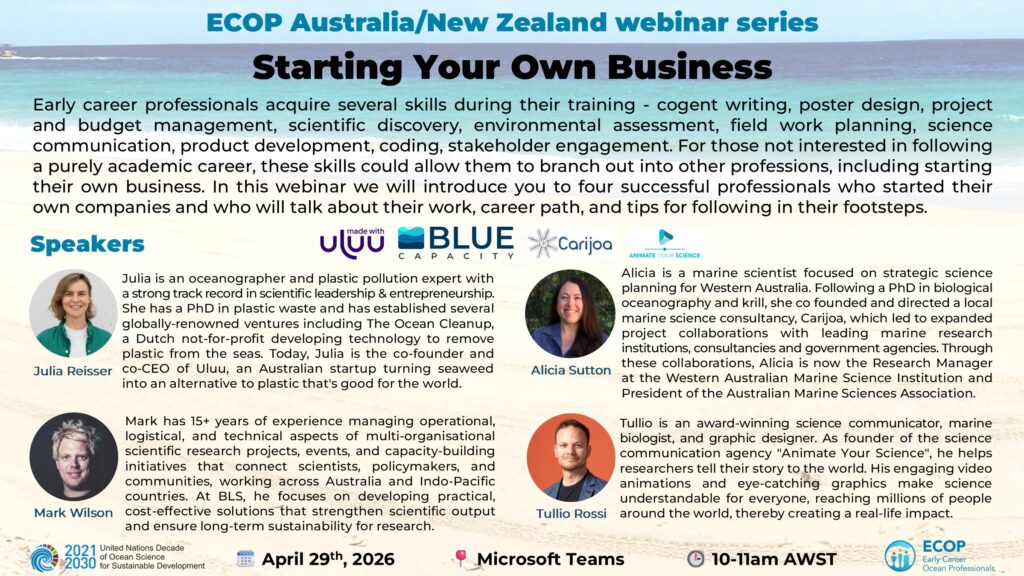
You can watch the recording of the Webinar Series Episode #2 – Starting Your Own Business with Dr Julia Reisser (ULUU), Dr Alicia Sutton (Carijoa), Mr Mark Wilson (Blue Logistical Solutioins), and Dr Tullio Rossi (Animate Your Sciences) on the ECOP Australia & New Zealand Playlist in the ECOP YouTube Channel.
25 March 2026
The Node held its first webinar!
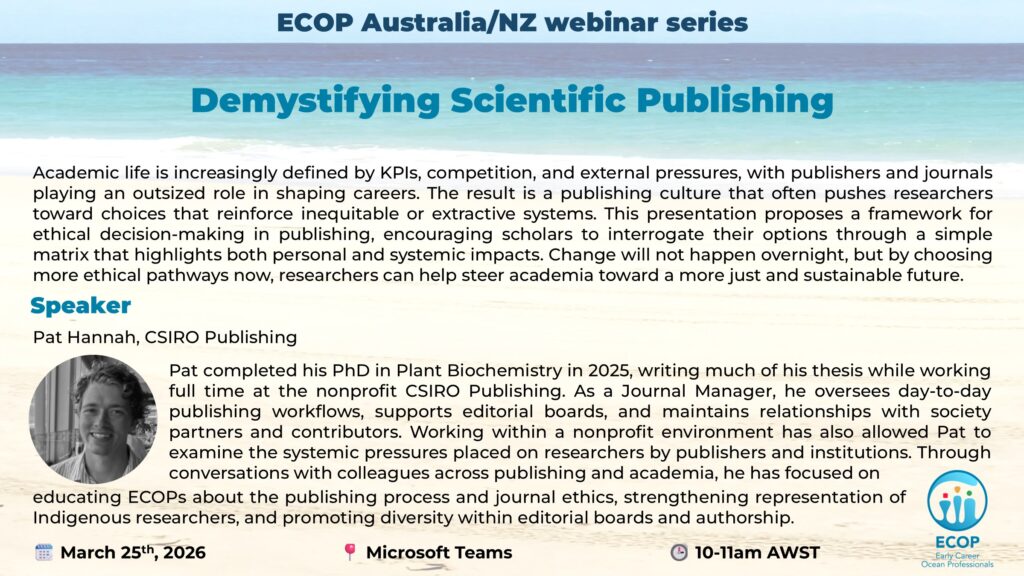
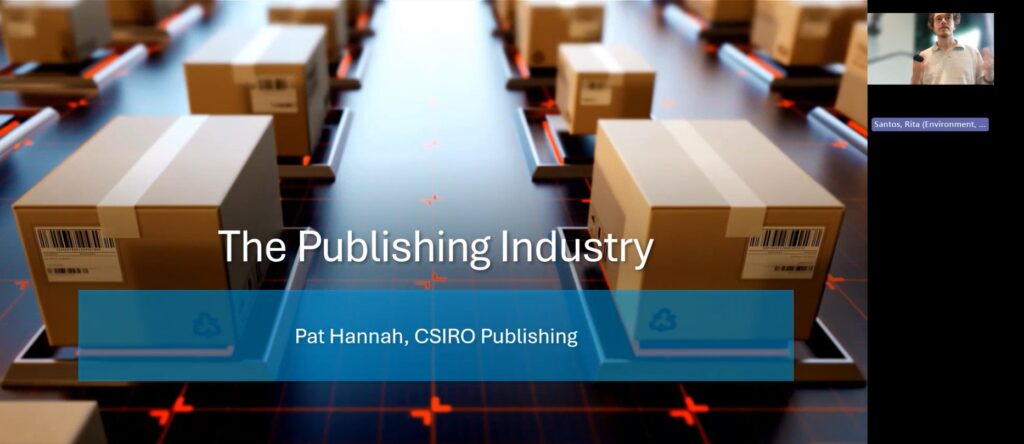
You can watch the recording of the Webinar Series Episode #1 – Demystifying Scientific Publishing with Dr Pat Hannah, from CSIRO Publishing, on the ECOP Australia & New Zealand Playlist in the ECOP YouTube Channel.
17 March 2026
The Node is now on Instagram with its new member promotion campaign! Follow our account to get to know your peers and consider sharing a bit about yourself with the community!
We aim to post at least once a month, but will post more often (up to weekly) if there is demand!
Wondering how these will look? The first 3 will show examples from the current Node coordinators.
4 March 2026
The Node coordinators held a virtual meeting to update the membership on the upcoming activities being organised for this year! If you were unable to attend but would like to know what was presented, contact the coordinators (australia_newzealand@ecopdecade.org) to receive the file with presentation slides.
1 September 2025
The ECOP AUS/NZ Node is now on LinkedIn! Follow and share our Page to connect with ECOPs across the region, discover networking, mentoring, and career development opportunities, and celebrate the amazing research and achievements of ECOPs.
12-17 July 2025
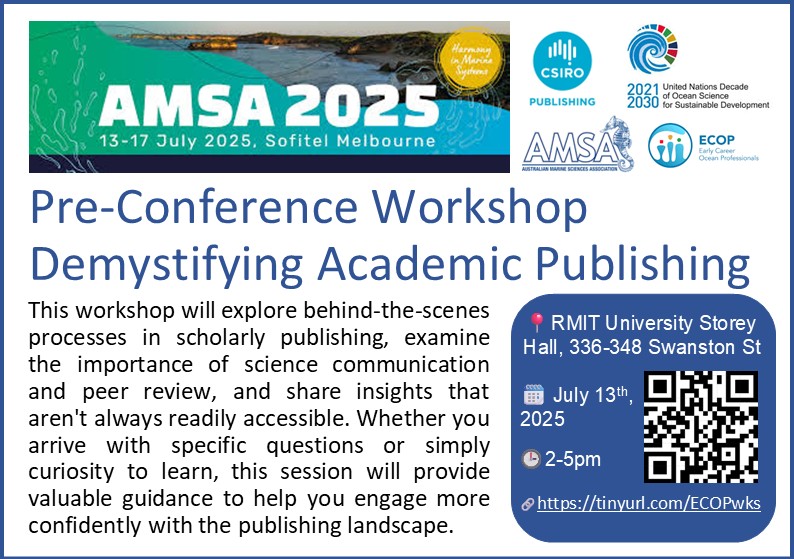
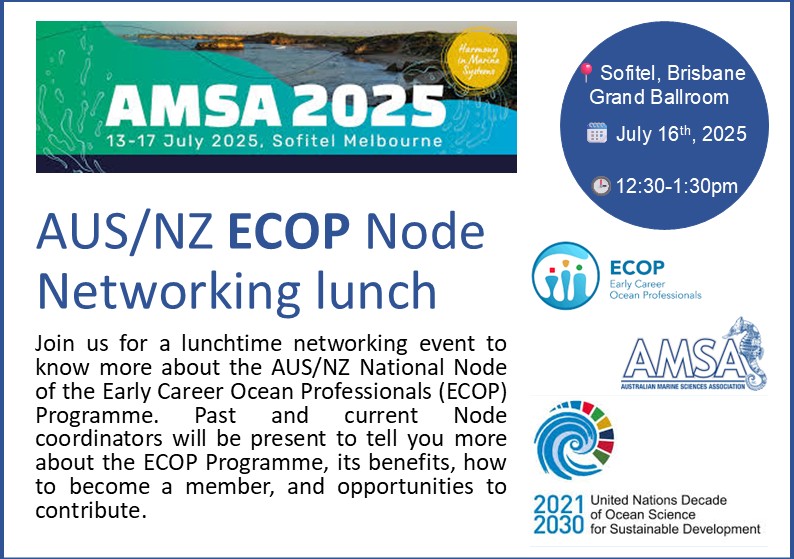
We are happy to report that ECOP AUS/NZ was present at AMSA 2025 in Melbourne! We organised a pre-conference workshop on ‘Demystifying Academic Publishing’ in partnership with CSIRO Publishing and AMSA, as well as a networking lunch during the conference for members and attendees interested in hearing more about our National Node. A huge thank you to everyone who attended! Special thanks to Pat Hannah from CSIRO Publishing for sharing his wisdom with us! If you missed the workshop, we will work with Pat to organise an online repeat! Stay tuned for future events. Together, we’re making waves in ocean science.
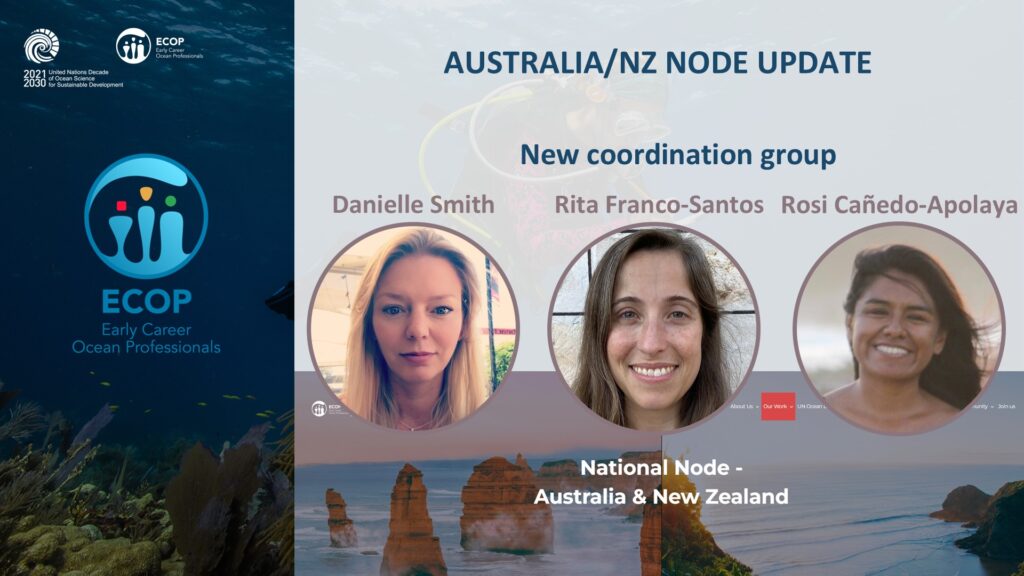
ECOP Australia/New Zealand Coordination Unit
Contact: australia_newzealand@ecopdecade.org
Channels: LinkedIn Page | Instagram | YouTube webinar playlist
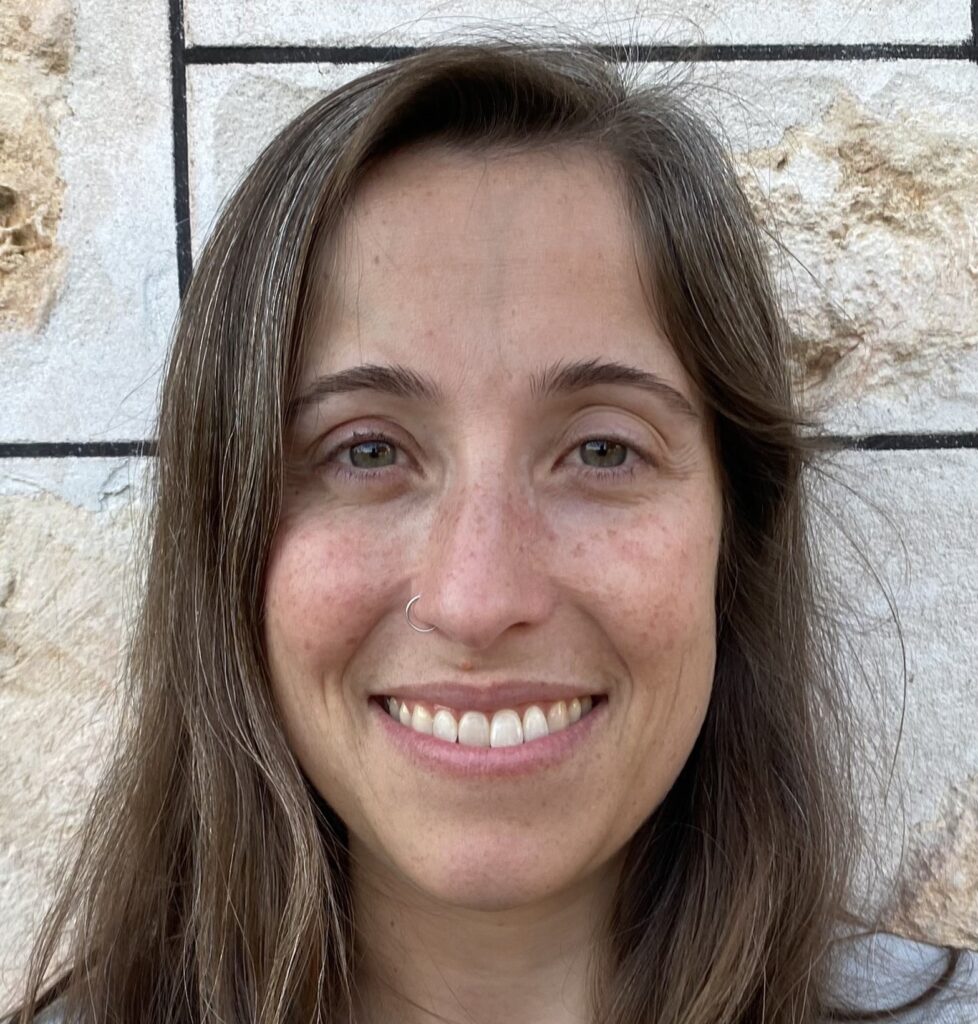
Lead coordinator
Rita M Franco-Santos
University of Western Australia, Perth, Australia
Rita Franco-Santos is the project manager for engagement programs and training initiatives at the Minderoo OceanOmics Centre at UWA. She has a marine ecology background, and her more recent research focuses on carbon pathways in kelp forests, specifically on the fate and magnitude of kelp-derived carbon, and the potential for these ecosystems to contribute to marine carbon sequestration. She has previous experience in zooplankton (feeding) ecology, having worked with cephalopods, copepods, polychaete and urchin larvae, and krill; and in lipid biochemistry. She studied lower trophic levels in food webs from ecosystems ranging from the tropics to the poles, including the Atlantic coast of Panama, the North Sea, the Arctic, Antarctica, and Western Australia.
Rita is also a Member-at-Large in the Board of Directors of the Association for the Sciences of Limnology and Oceanography (ASLO).
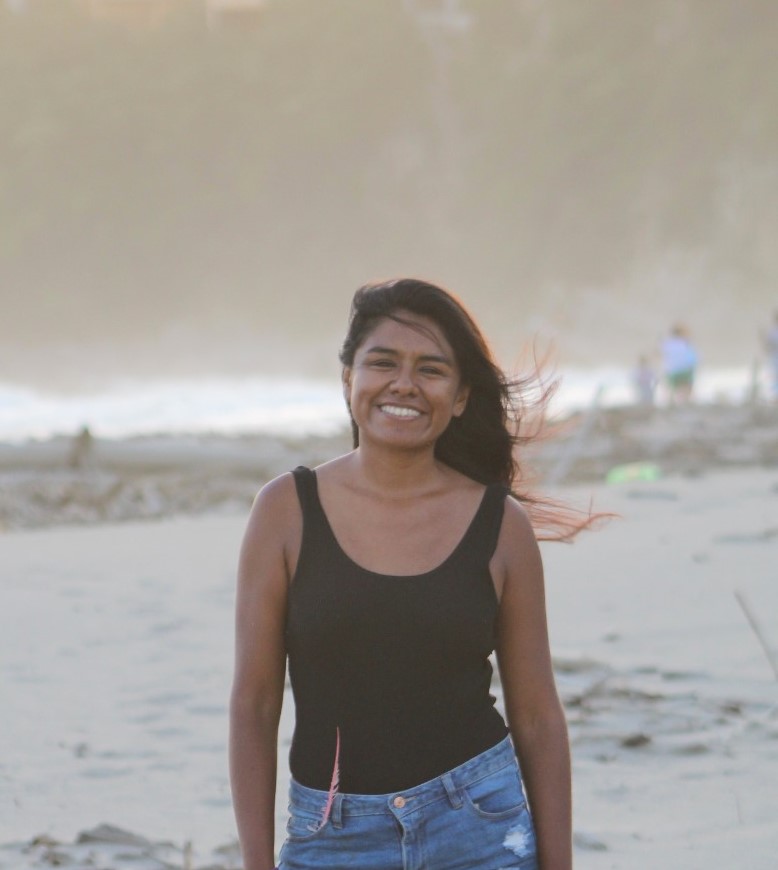
Co-coordinator
Rosa Maria Cañedo-Apolaya
Institute for Marine and Antarctic Studies (IMAS) and Centre for Marine Socioecology (CMS), University of Tasmania, Hobart, Australia
Rosa Maria is a PhD candidate at the University of Tasmania’s Institute for Marine and Antarctic Studies and the Centre for Marine Socioecology. Her current research aims to assess risk literacy levels and how diverse ocean user groups perceive and understand the risks, benefits, and trade-offs associated with Blue Economy sectors to support informed participation in decision-making processes. As a marine scientist, Rosa Maria has experience in shark conservation, artisanal fisheries, and marine biodiversity monitoring. She is driven by a strong belief in the value of interdisciplinary collaboration, and is passionate about using creative and inclusive approaches to make complex science more accessible and actionable, as well as supporting the strengthening of our collective relationship with the ocean.

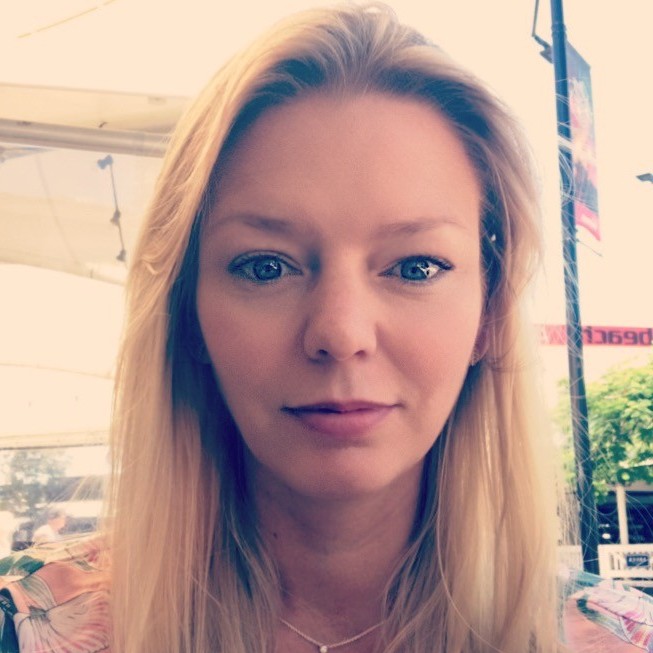
Co-coordinator
Danielle Smith
Centre for Policy Futures, University of Queensland, Blue Economy Cooperative Research Centre, Centre for Marine Socioecology (CMS), Brisbane, Australia
Danielle Smith is a Postdoctoral Research Fellow at the Centre for Policy Futures, University of Queensland. Working with the Blue Economy Cooperative Research Centre her research identifies international best practices in the regulatory and policy frameworks that will inform and govern the expanding offshore wind energy industry in Australia. Danielle’s experience and interests are international ocean governance, biodiversity in areas beyond national jurisdiction (BBNJ), marine protected areas, marine spatial planning (MSP), socio-ecological and cumulative impact assessment of anthropogenic activities and other climatic impacts on the marine environment.
Past coordinating team members
Partners
Would you like to partner with us and provide expertise, financial support, or other resources? Get in touch via australia_newzealand@ecopdecade.org.