
On May 11-12, 2026, Cyprus hosted “Riding the Wave: Advancing the EU Ocean Pact through Science, Innovation and Cooperation”, a high-level conference organised by the Cyprus Marine and Maritime Institute (CMMI), the Eratosthenes Centre of Excellence, and the Deputy Ministry of Research, Innovation and Digital Policy, under the auspices of the Cyprus Presidency of the Council of the European Union. Bringing together scientists, policymakers, industry leaders, entrepreneurs and civil society representatives, the event explored how research, innovation and collaboration can help shape a sustainable future for Europe’s ocean.
Rather than focusing on a single discipline, Riding the Wave embraced the complexity of ocean sustainability. Sessions covered topics ranging from marine biodiversity and ecosystem restoration to blue carbon, maritime decarbonisation, digital technologies and ocean governance. Together, they conveyed a central message underpinning the future European Ocean Pact: addressing ocean challenges requires coordinated action across scientific disciplines, economic sectors and public institutions.
Among the participants were two members of the Early Career Ocean Professionals (ECOP) Programme, Mathieu Poupon (CNRS–LOCEAN, ECOP France) and Fernanda Ferreira (NOVA School of Law, ECOP Portugal), who contributed to complementary workshops reflecting the diversity of today’s ocean challenges. Their participation offered an opportunity not only to share expertise, but also to engage with researchers, policymakers and practitioners working to translate ocean science into effective action.
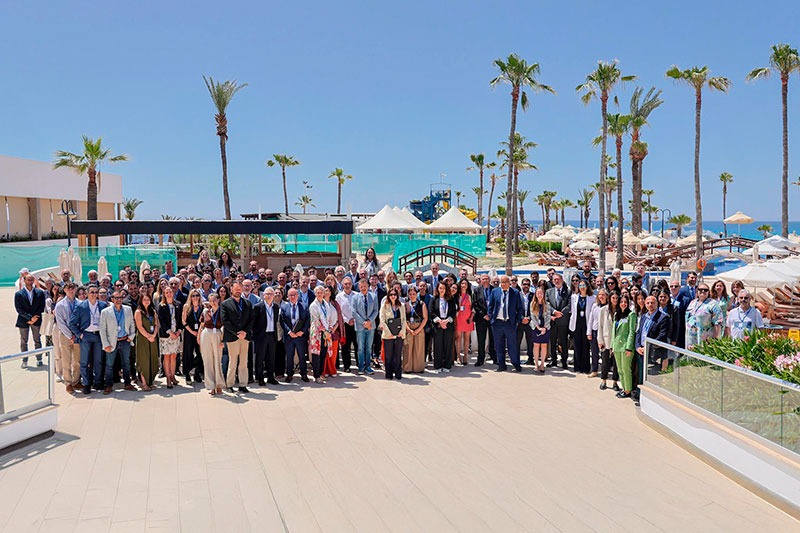
Participants gathered at the Riding the Wave conference in Ayia Napa, Cyprus. (Credit: CMMI)
Decarbonising shipping without shifting the burden elsewhere
The workshop on maritime decarbonisation examined the technological, regulatory and economic pathways that could move European shipping towards net-zero emissions. The discussion reflected the difficulty of the challenge: maritime transport remains essential to global trade, yet is still heavily dependent on fossil fuels and unlikely to be transformed by any single technology.
Mathieu Poupon’s contribution focused on the need to look beyond emissions released directly onboard vessels. Alternative fuels, carbon capture systems and new propulsion technologies may reduce emissions at sea, but this does not necessarily mean that they deliver equivalent reductions across their full life cycle. Their environmental credibility therefore depends on a broader assessment of the systems required to produce, operate and support them.
Their overall climate value depends on how the necessary energy, fuels, materials and infrastructure are produced. Hydrogen-derived fuels, for example, may require substantial quantities of low-carbon electricity, while onboard carbon capture systems consume additional energy and rely on infrastructure for transporting, handling and permanently storing captured CO₂. The availability and carbon intensity of these supporting systems can therefore strongly influence the actual benefits of each option.
Without a full life-cycle perspective, some solutions may simply move emissions upstream, place additional pressure on limited supplies of low-carbon electricity or create new environmental impacts elsewhere. Comparing maritime decarbonisation pathways therefore requires considering not only direct operational emissions, but also upstream production, infrastructure needs, resource use and potential trade-offs with the decarbonisation of other sectors.
The discussion therefore pointed towards a broader definition of credible maritime decarbonisation. Technological innovation will be essential, but it must be accompanied by transparent carbon accounting, robust environmental assessment and regulation capable of comparing options across their full value chains. Reducing shipping emissions should not come at the cost of shifting the burden to other sectors, regions or ecosystems.
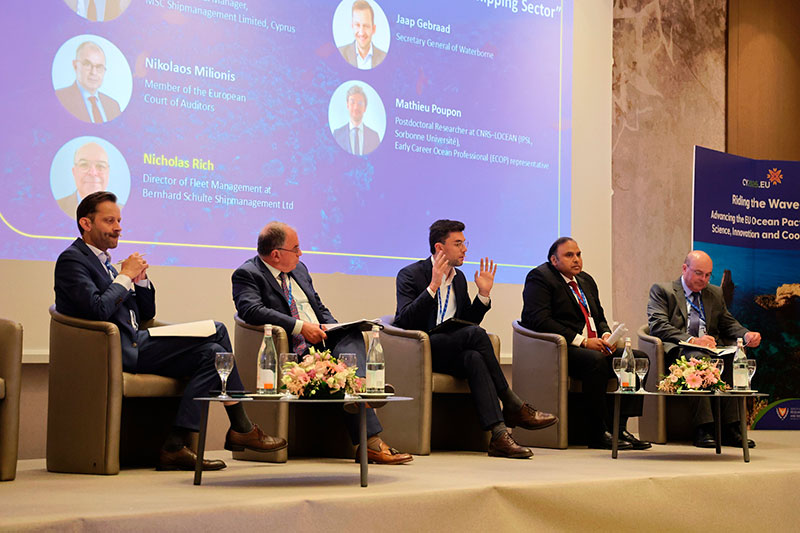
Mathieu Poupon speaking during the panel on maritime decarbonisation and the transition towards net-zero shipping. (Credit: CMMI)
Keeping ecosystems at the centre of blue carbon policy
The blue carbon workshop explored how coastal and marine ecosystems could contribute to European climate objectives. Seagrass meadows, saltmarshes and other coastal habitats can capture and store carbon while also supporting biodiversity, reducing coastal vulnerability and sustaining local communities. Their growing recognition in climate policy therefore offers significant opportunities for conservation and restoration.
Building on this broader understanding of blue carbon, Fernanda Ferreira’s contribution examined the role of deep-sea processes and ecosystems in the blue carbon debate. While blue carbon policy has largely focused on coastal ecosystems, the open and deep ocean also plays an important role in storing and regulating carbon, although many of these processes remain poorly understood.
Additionally, activities such as bottom trawling and deep-seabed mining could disturb marine sediments, affect ecosystem functions and potentially undermine the ocean’s role in climate regulation. Limited scientific knowledge and the technical difficulty of monitoring the deep sea therefore strengthen the case for a precautionary approach, supported by investment in ocean observation and research. Emerging European initiatives, including the Ocean Eye and proposals to strengthen deep-sea observation capacity, could help close these knowledge gaps and provide a stronger scientific basis for future decision-making.
These scientific uncertainties also have direct implications for European ocean and climate policy. New initiatives, such as the European Ocean Act, should remain consistent with existing environmental commitments and precautionary approaches to activities whose impacts remain uncertain. For blue carbon policy, this means looking beyond a narrow focus on maximizing carbon sequestration in well-known coastal habitats and recognizing the importance of protecting existing marine ecosystems and the ecological processes that sustain services such as carbon storage and climate regulation.
A credible blue carbon strategy must therefore begin with ecosystem protection. Strong monitoring, precautionary decision-making and safeguards for biodiversity should remain central as blue carbon is incorporated into climate policy. Carbon storage can be an important benefit, but it should not become the sole measure of success. A broader ecosystem-based approach, supported by tools such as ocean accounting, could help capture the multiple services provided by marine ecosystems, including biodiversity protection, climate mitigation and adaptation.
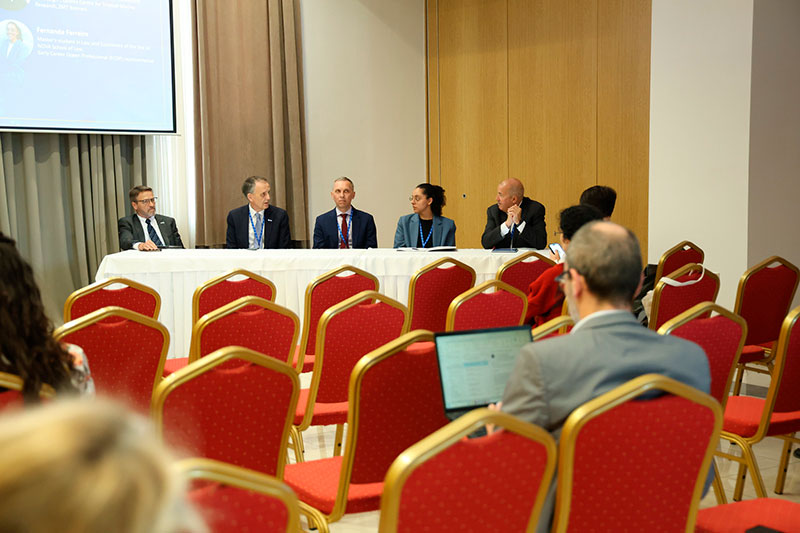
Fernanda Ferreira contributing to the workshop on Blue Carbon and Climate Neutrality: Nature-Based Solutions and Ocean Accounting for Europe’s Climate Goals. (Credit: CMMI)
From scientific expertise to policy influence
Across both workshops, a broader question repeatedly emerged: how can scientific expertise exert meaningful influence beyond the research community? Producing robust evidence is essential, but its impact ultimately depends on whether it can inform regulation, investment, technological development and public decision-making.
Riding the Wave created a space where proposed solutions could be examined not only in scientific terms, but also against practical, legal and economic constraints. This kind of exchange is particularly valuable because it brings researchers into policy discussions before priorities and implementation pathways are fully defined. It also challenges scientists to communicate uncertainty, trade-offs and systemic impacts in ways that remain rigorous while being accessible to non-specialist audiences.
The conference therefore highlighted that the science–policy interface is not simply a matter of transferring knowledge from one community to another. It is a process of dialogue in which scientific questions are reshaped by societal needs, and policy choices are strengthened through critical engagement with evidence. Building this capacity will be essential if Europe’s ocean ambitions are to translate into effective and environmentally credible action.
Giving ECOPs a voice in Europe’s ocean agenda
For Mathieu and Fernanda, the conference offered an opportunity to engage directly with policymakers, industry representatives, researchers and practitioners working on Europe’s emerging ocean agenda.
Such participation is particularly important for Early Career Ocean Professionals. ECOPs are often closely involved in producing new knowledge, developing interdisciplinary approaches and questioning established assumptions, yet they remain underrepresented in many of the spaces where long-term ocean strategies are shaped. Inviting them into these conversations is therefore not only a matter of professional development or generational inclusion; it can also broaden the range of perspectives informing the debate.
Policy-oriented events also allow ECOPs to develop skills and networks that are difficult to acquire within a single academic or professional setting. They provide opportunities to understand the constraints faced by other sectors, communicate across disciplinary boundaries and connect with peers working in different national and institutional contexts. The presence of representatives from ECOP France and ECOP Portugal illustrated the value of the wider ECOP network in linking national communities with European and international ocean initiatives.
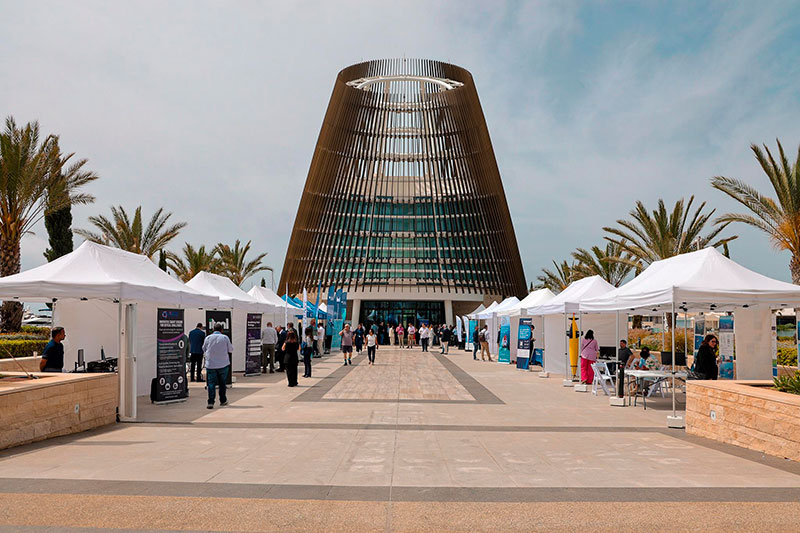
The Riding the Wave conference venue and exhibition area in Ayia Napa. (Credit: CMMI)
Looking ahead: from dialogue to action
The conference took place at a pivotal moment for Europe’s ocean agenda. With the European Ocean Pact providing a framework for integrated governance, the priority now is implementation: aligning ocean protection, research and innovation, maritime competitiveness, coastal resilience and international cooperation. The future European Ocean Research and Innovation Strategy, the European Ocean Observation Initiative and the Digital Twin Ocean will be central to this effort.
Their success will depend not only on generating more data and technologies, but on turning them into accessible knowledge, tested solutions and effective policy. Europe must also create clearer pathways from research to demonstration, investment and deployment. Mission Ocean demonstration projects, the EU Ports Strategy and regional initiatives could help turn ports and coastal areas into testing grounds for maritime decarbonisation, ecosystem restoration and climate adaptation, particularly in the Mediterranean.
Finally, implementing this agenda will require sustained investment in blue skills and future leadership. ECOPs should be involved not only as beneficiaries, but as active contributors to the design and delivery of Europe’s ocean policies. Their participation can help ensure that the next phase of the European ocean agenda is scientifically grounded, inclusive and capable of delivering lasting impact.