
ECOP Publications
Photo credit: The Ocean Agency / Ocean Image Bank

Rita M. Franco-Santos, Joelle Habib, Evgeniia Kostianaia, Shenghui Li, Naomi Krauzig
First published: 22 May 2026
The UN Ocean Decade was launched in January 2021 to help society transition from “the ocean we have” to “the ocean we want.” As the largest coordinated ocean science movement worldwide, it leverages connections among global stakeholders, promotes the collection of data, information, and knowledge, and drives policy changes at multiple levels to achieve “the science we need” for this transition. To guide this work, it identified 10 Challenges for collective impact, including “skills, knowledge, technology and participation for all”. The ECOP Programme tackles this Challenge by providing capacity development and networking opportunities to its membership, by elevating and strengthening their diverse perspectives through a collective voice, and by empowering the next generation of ocean leaders to participate in and influence major Decade processes and decisions. We outline in this article how ECOPs can get involved with and benefit from the Programme. Read more…

Marie-Morgane Rouyer, Juliette Aminian Biquet, Isabelle Claire Parada Dela Paz, Axel Eriksson, Jay Marisca Gietzelt, Evgeniia Kostianaia, Paul Mukhin, Sean Russell, María Elisa Sánchez, Danian Singh, Deign Frolley Cabañero Soriano, Swetha Stotra Bhashyam, Niklas Weins
First published: 09 April 2026
Young people form a large demographic group and have specific interests and views on the current socio-environmental crises. However, they are largely underrepresented in decision-making. To bring their visions and claims into environmental governance, youth have created alternative pathways of participation, such as youth networks. Yet, their roles and contributions are poorly understood. Drawing from the first-hand experiences of 12 youth networks, we shed light on the bridging role of youth networks in environmental governance, showcase some of their achievements, describe barriers they encounter and offer recommendations to overcome them.

Laura Kaikkonen, Mia Strand, Priyatma Singh, Rebecca Shellock, Raphael Roman, Alycia J Smith, Siddhi Joshi, Chelsey A Baker, Katharine T Bigham, Beatriz S Dias, Bolanle T Erinosho, Joana Filipa Fernandes, Marta Ferraro, Odei Garcia-Garin, Ignacio Gianelli, Xochitl E Elías Ilosvay, Evgeniia Kostianaia, Inés M Leyba, Shenghui Li, Tanya Marshall, Raquel R Oliveira, Okko Outinen, Marie-Morgane Rouyer, Costanza Scopetani, Danian Singh
ICES Journal of Marine Science, Volume 82, Issue 8, August 2025, fsaf143,
Published: 15 August 2025
There is an increasing recognition of the importance of involving early career researchers (ECRs) in scientific positions of trust within national and international organizations, collaborative research projects, networks, and working groups. While the inclusion of ECRs in positions traditionally dominated by more established scientists is a welcome development to increase diversity, equity and inclusion in science, ECRs are often brought into different processes without consideration of the differences in career stages and unfamiliarity of newcomers to projects and processes. These challenges are particularly felt by ECRs with multiple disadvantaged statuses or identities (e.g. ECRs from ethnic minorities, the Global South, and those with caring responsibilities). This paper presents ten guidelines prepared as a participatory process of 12 marine and polar science early career networks, aiming to provide a comprehensive framework for various stakeholders involved in the academic and research ecosystem to improve ECR engagement in collaborations and institutional processes. . Read more…

Satterthwaite, E.V., Robbins, M., Crespo, G.O., Puskic, P.S., Giddens, J., Kostianaia, E., Giron-Nava, A., Elsler, L.G., Rguez-Baron, J.M. and Brodnicke, O.B in ICES Journal of Marine Science, Volume 82, Issue 1, January 2025, fsae201. Published: 27 January 2025
Intergenerational diversity is central to achieving long-term ocean sustainability. As such, one of the main goals and challenges in the UN Decade of Ocean Science for Sustainable Development (2021–2030) is fostering engagement and leadership across career stages and from diverse sectors. To understand the knowledge and professional development needs of the next generation, we surveyed the perspectives of 1344 Early Career Ocean Professionals (ECOPs) across 108 countries and territories. We assess the survey results, reflect on what has been done to address these needs halfway through the Ocean Decade, and suggest areas to further progress. We found that climate change and its social and ecological impacts are the unifying topical priority for ECOPs globally. Read more…
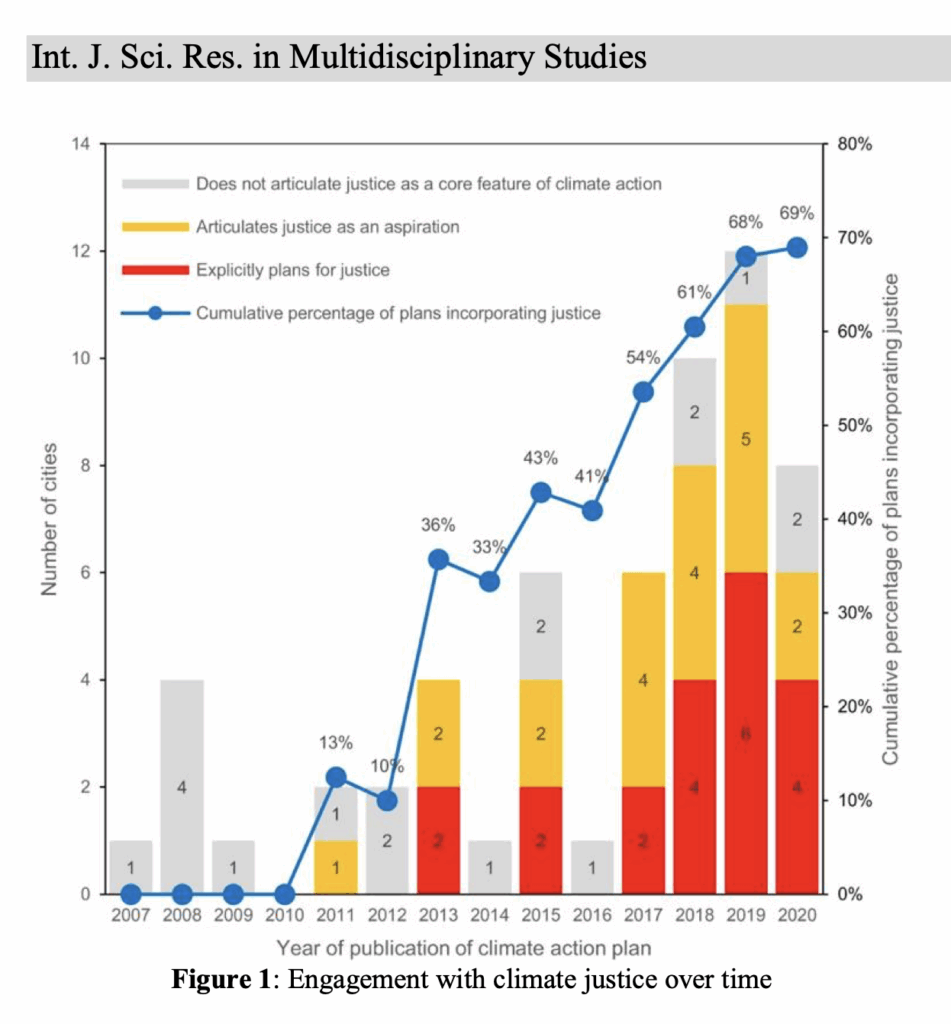
Lord Offei-Darko in International Journal of Scientific Research in Multidisciplinary Studies , Vol.11, Issue.1, pp.29-35, 2025.
Climate justice is a complex concept encompassing ethical, legal, and political dimensions, emphasizing the need to rectify environmental and social disparities exacerbated by climate change. The Ghana National Youth Policy (GNYP) serves as a foundational policy guide for governmental and non-governmental organizations working on youth-related climate change issues crucial to Ghana`s development. The study utilized a descriptive review, drawing on secondary data sources such as books, articles, and journals to explore knowledge gaps regarding the recognition of climate justice within the GNYP. The findings reveal that the GNYP`s methodologies inadequately address youth climate justice, focusing primarily on youth adaptation to climate change and coping strategies for climatic injustices, diverging from climate justice principles. Read more…
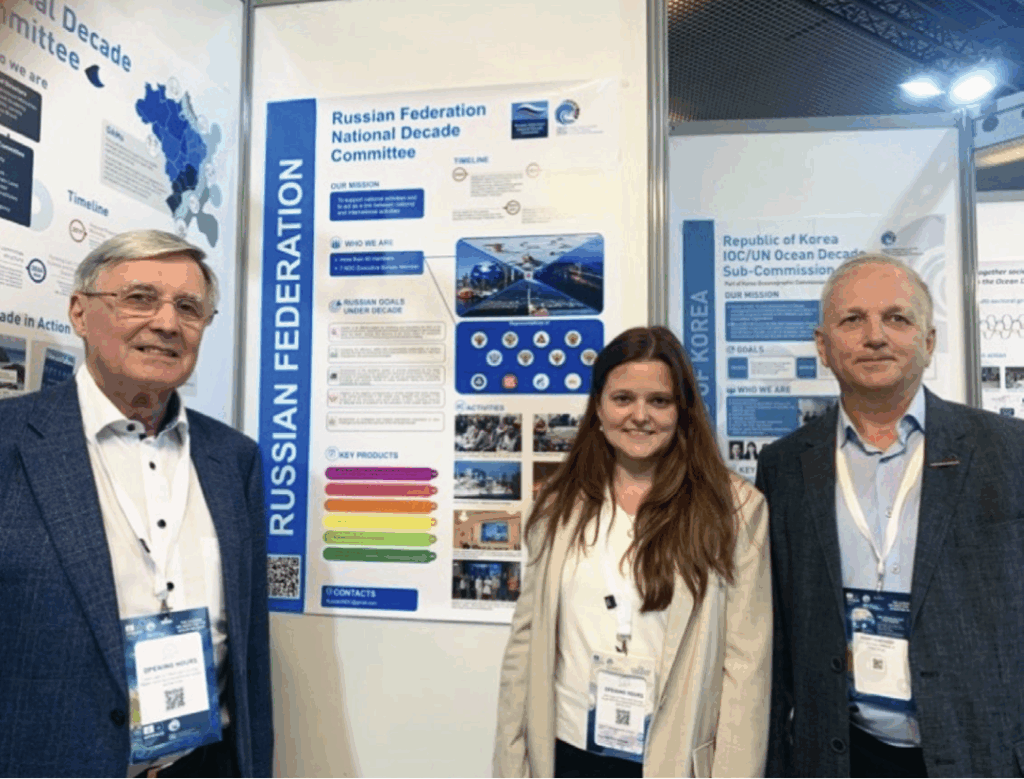
Participants in the 2024 Ocean Decade Conference from the Russian Federation with the poster of the Russian National Committee for the UN Decade of Ocean Science. From left to right: S. M. Shapovalov, E. A. Kostianaia, A. G. Kostianaia
Shapovalov, S.M., Kostianoy A. G., Kostianaia E. A. 2024 Ocean Decade Conference. – Journal of Oceanological Research, 2024, 52 (2), 256–276.
The article is devoted to a description of the global international conference dedicated to the UN Decade of Ocean Science, which took place in April 2024 in Barcelona (Spain). Brief information about the conference program, satellite events, invited speakers and conference participants is provided. The main issues discussed at the conference are considered and the main provisions of its Declaration are given. Please note: This article is in Russian. Read more…
Roman, R., Kostianaia, E., Bowes, A., Satterthwaite, E., Savage, C., Ilosvay, X.E.E., Fox, N., Boujmil, I., Nocito, E., Santamaria, S.M. and Maggioni, T., 2024. Marine Technology Society Journal, 58(1-2), pp.8-14.
Since its endorsement as a global network Programme in June 2021, the Early Career Ocean Professional (ECOP) Programme has been instrumental in supporting ocean professionals worldwide through funding, training, networking opportunities, and career development initiatives. Rooted in the vision of elevating diverse perspectives, the ECOP Programme fosters knowledge exchange between experienced professionals and ECOPs to promote ocean sustainability. As the UN Decade of Ocean Science for Sustainable Development (2021-2030) enters its fourth year of implementation, the ECOP Programme has grown and diversified to a formidable extent, both geographically and thematically. With over 5,200 ECOPs from 151 countries and overseas territories, the global ECOP community is currently dispersed across five regional nodes and more than 40 national hubs. This commentary brings some of the most active ECOP nodes into the limelight, amplifying their collective efforts to better understand, engage, and empower the next generation of ocean professionals across different cultural contexts. Read more…


SPECIAL ISSUE ON SEA GRANT: SCIENCE SERVING AMERICA’S COASTLINES AND PEOPLE, Oceanography | Vol. 37, No. 1 | March 2024
By Erin V. Satterthwaite, Liz McQuain, Amalia A. Almada, Jessica M. Rudnick, Alyson L. Eberhardt, Angee N. Doerr, Ryan J. O’Connor, Nicole Wright, Rebecca A. Briggs, Matthew J. Robbins, Carolina Bastidas, Eric L. Sparks, Kristen A. Goodrich, and Wells J. Costello
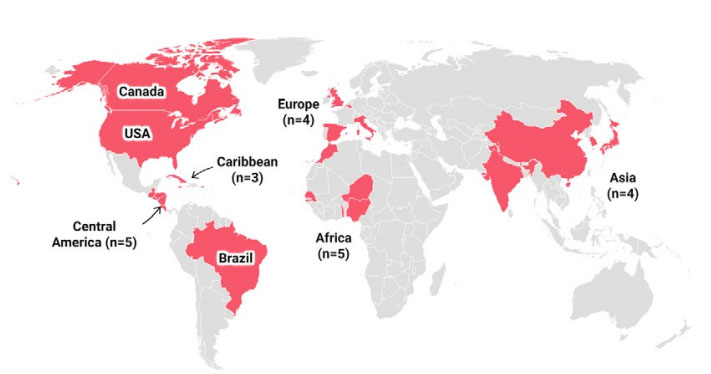
The Summer 2023 issue of PICES Press featured two articles co-authored by ECOP coordinators and members, including (1) an update on the ECCWO5 interactive workshop in Bergen in April 2022, where during the ECCWO5 symposium, Early Career Ocean Professionals (ECOPS) from around the globe organized in-person and virtual interactive workshop sessions focused on the theme of, “Conducting Science at the Intersection of Climate Change and Marine ecosvstems” and (2) a detailed account of the development of national ECOP nodes in the North Pacific (Canada, China, Japan, Russia, South Korea and USA).

Read US Node Steering Committee member Celina Harris’s commentary in the latest journal from Marine Technology Society, which is the second special issue on the UN Decade of Ocean Science.
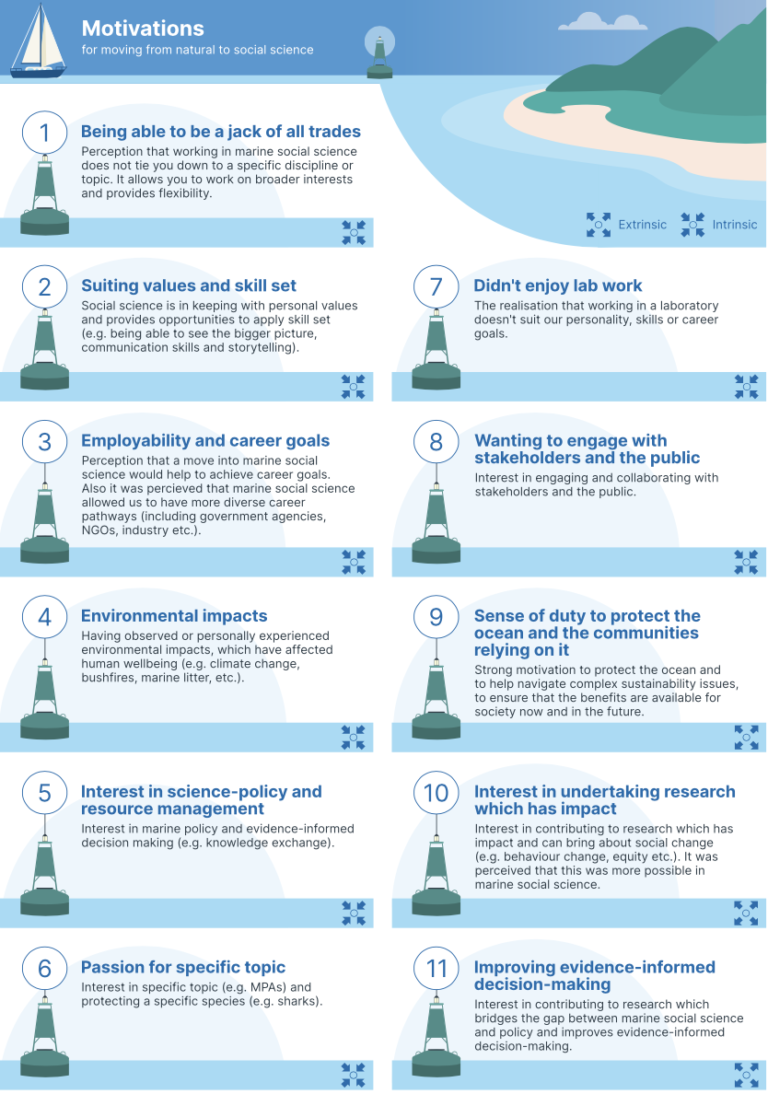
Shellock, R. J., Cvitanovic, C., Badullovich, N., Catto, D., DelBene, J. A., Duggan, J., D. B. Karcher, A. Ostwald. & Tuohy, P. (2022). Crossing disciplinary boundaries: motivations, challenges, and enablers for early career marine researchers moving from natural to social sciences. ICES Journal of Marine Science. DOI:10.1093/icesjms/fsac218
Recent years have seen increasing calls to better document and understand the human dimensions of the marine and coastal environment and to incorporate this knowledge into decision-making. Human dimensions of the marine and coastal environment are best investigated through the application of marine social science. Individuals within marine social science are not solely “pure” social scientists, but rather are a diverse and interdisciplinary community, including many who have moved from the natural sciences to pursue a career in marine social science. This is particularly the case for early career researchers, with many moving from natural to social science earlier in their academic careers than their predecessors, and thus developing stronger interdisciplinary skills than previous generations of social scientists. In this perspective, we draw on our experiences, highlighting our main motivations for moving from natural to social science, the barriers we have faced and our top tips for early career researchers faced with similar opportunities and challenges. The ten tips include: “Work with like-minded researchers,” “Learn from and be inspired by academic heroes,” “Learn about and engage with research philosophy, positionality and reflexivity,” “Value your own skillset and perspective,” and “Be patient and kind to yourself.”
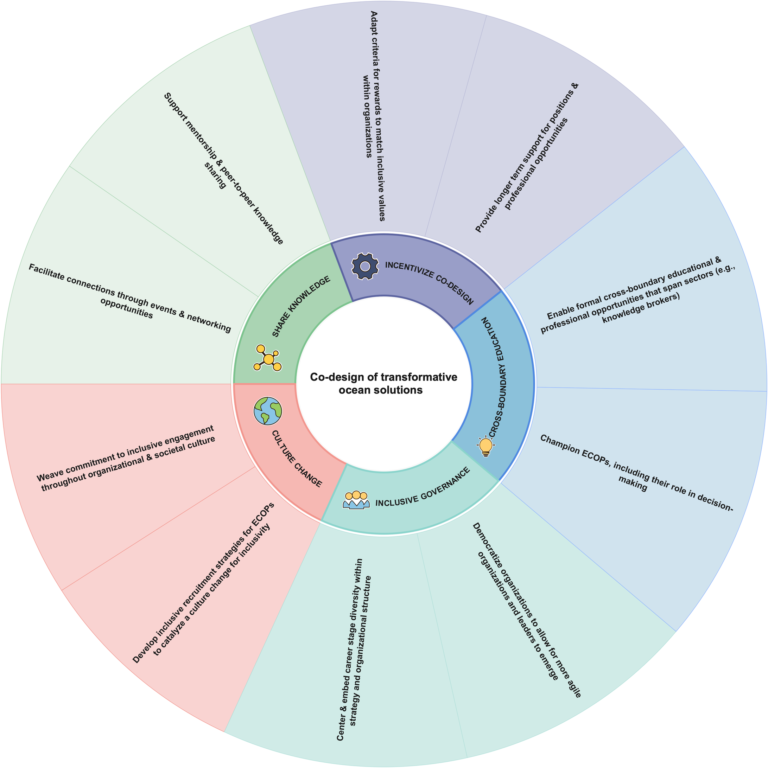
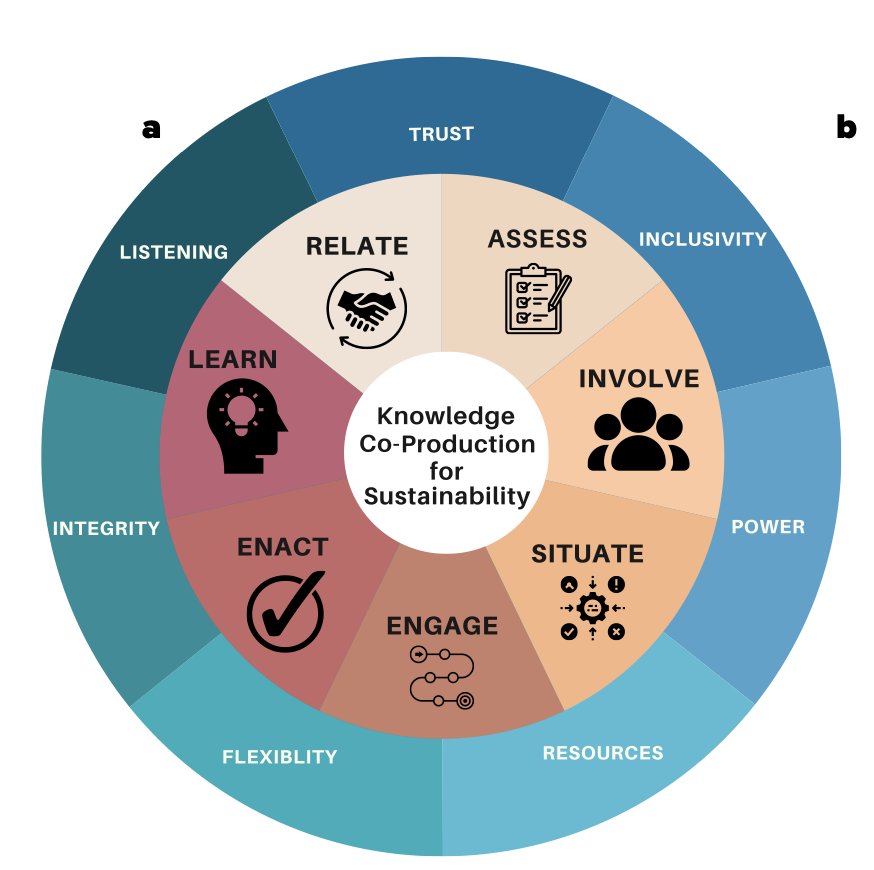
Satterthwaite EV, Komyakova V, Erazo NG, Gammage L, Juma GA, Kelly R, et al. (2022) Five actionable pillars to engage the next generation of leaders in the co-design of transformative ocean solutions. PLoS Biol 20(10): e3001832. https://doi.org/10.1371/journal. pbio.3001832
Solutions to complex and unprecedented global challenges are urgently needed. Overcom- ing these challenges requires input and innovative solutions from all experts, including Early Career Ocean Professionals (ECOPs). To achieve diverse inclusion from ECOPs, funda- mental changes must occur at all levels—from individuals to organizations. Drawing on insights from across the globe, we propose 5 actionable pillars that support the engagement of ECOPs in co-design processes that address ocean sustainability: sharing knowledge through networks and mentorship, providing cross-boundary training and opportunities, incentivizing and celebrating knowledge co-design, creating inclusive and participatory gov- ernance structures, and catalyzing culture change for inclusivity. Foundational to all actions are the cross-cutting principles of justice, equity, diversity, and inclusivity. In addition, the pil- lars are cross-boundary in nature, including collaboration and innovation across sectors, disciplines, regions, generations, and backgrounds. Together, these recommendations pro- vide an actionable and iterative path toward inclusive engagement and intergenerational exchange that can develop ocean solutions for a sustainable future.
Schadeberg, Amanda, et al. “Productivity, pressure, and new perspectives: impacts of the COVID-19 pandemic on marine early-career researchers.” ICES Journal of Marine Science (2022).
The worldwide disruption caused by the beginning of the COVID-19 pandemic has dramatically impacted the activities of marine scientists working towards the goals of the UN Ocean Decade. As in other disciplines, marine early-career researchers (ECRs) are essential contributors to the development of novel and innovative science. Based on a survey of 322 of our peers, we show that the pandemic negatively impacted marine ECRs in ways that further exacerbate existing structural challenges such as social isolation, job insecurity, and short-term contracts, competitive funding, and work pressure. Furthermore, we find that the success and wellbeing of marine ECRs depends heavily on networking opportunities, gaining practical experience, collecting data, and producing publications, all of which were disrupted by the pandemic. Our analysis shows that those in the earliest stages of their careers feel most vulnerable to long-term career disadvantage as a result of the pandemic. This paper contributes to the empirical body of work about the impacts of the pandemic on marine science and offers recommendations on how marine ECRs should be supported to achieve the UN Ocean Decade’s goal of producing “the science we need for the ocean we want”
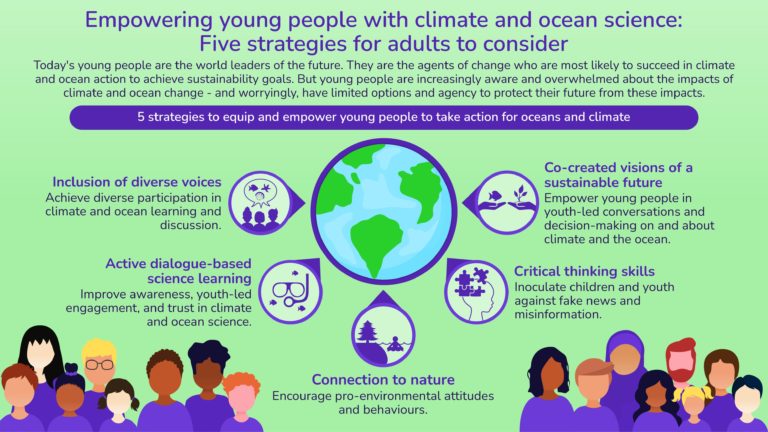
Kelly, Rachel, et al. “Empowering young people with climate and ocean science: Five strategies for adults to consider.” One Earth 5.8 (2022): 861-874. https://doi.org/10.1016/j.oneear.2022.07.007
Here, we present five actionable strategies to engage and empower young people with climate and ocean science in support of long-term sustainability: inclusion of diverse voices, active dialogue-based science learning, connection to nature, critical thinking skills, and co-created visions of a sustainable future. These strategies can help to strengthen young people’s engagement and agency to meet climate and ocean challenges. Together, the strategies can synergistically empower young people to have a say in shaping their sustainable future.

Evgeniia Kostianaia (Global Coordinator) explains in the Marine Technology Society Journal (Number 3), how the Early Career Ocean Professionals (ECOP) Programme has been established to empower ECOPs across the world, strengthening diverse perspectives of new generations of ocean professionals. The mission to ensure that knowledge is transferred between experienced and early career ocean professionals, to promote ocean sustainability for “The Ocean We Want.”
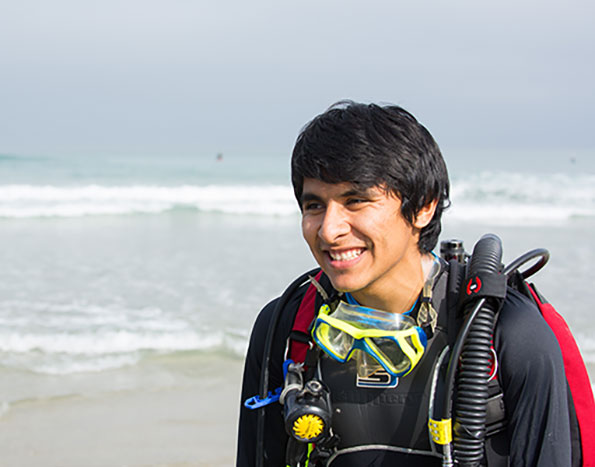
As the United Nations Ocean Conference unfolds in Lisbon this week, André Hoffmann Ocean Innovation Fellow Alfredo Girón-Nava shares his thoughts with Stanford University’s Center for Ocean Solutions on global goals for ocean conservation and the next generation of leadership.
A clock is ticking: The world has less than ten years to achieve ocean-related targets as part of the United Nations 2030 Agenda for Sustainable Development. Ocean health lies at the heart of Sustainable Development Goal 14, or SDG 14, which aims to conserve and sustainably use the ocean. However, there’s a growing recognition among global policymakers that this vast ecosystem is inextricably tied to goals for food security, livelihoods, climate action, and human health and well-being.
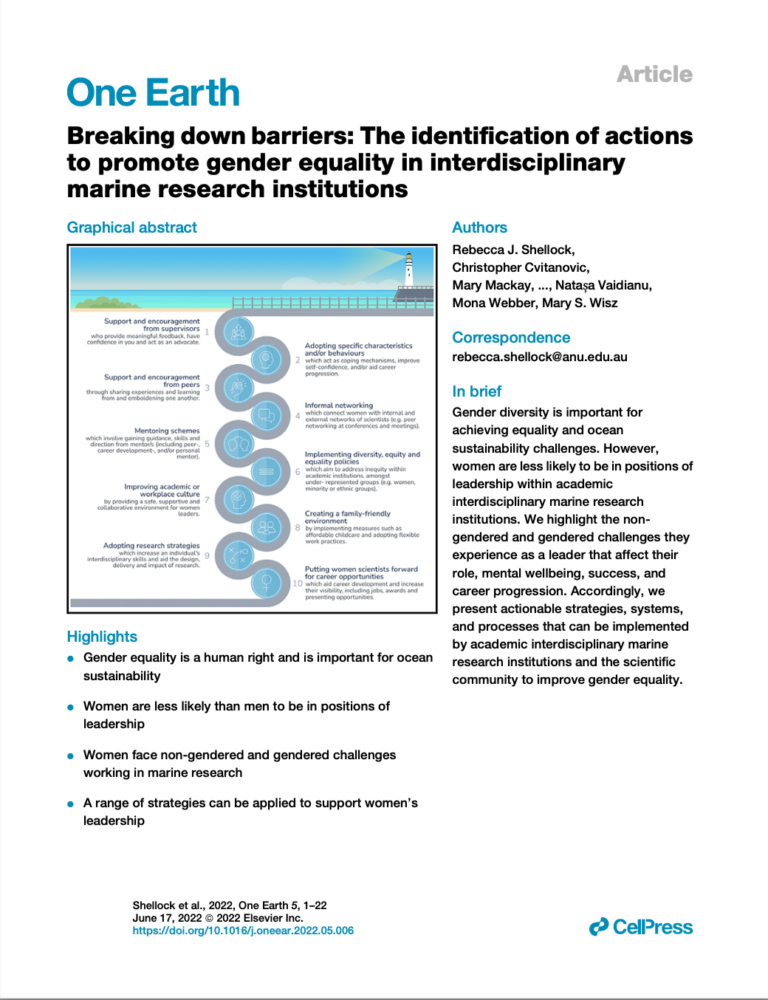
Shellock et al., 2022, One Earth 5, 1–22, June 17, 2022. https://doi.org/10.1016/j.oneear.2022.05.006
Interdisciplinary research is paramount to addressing ocean sustainability challenges in the 21st century. However, women leaders have been underrepresented in interdisciplinary marine research, and there is little guidance on how to achieve the conditions that will lead to an increased proportion of women scientists in positions of leadership. Here, we conduct in-depth qualitative research to explore the main barriers and en- ablers to women’s leadership in an academic interdisciplinary marine research context. We found that inter- disciplinarity can present unique and additional barriers to women leaders (e.g., complexity and lack of value attributed to interdisciplinary research) and are exacerbated by existing gender-specific issues that women experience (e.g., isolation and underrepresentation and stereotyping). Together these barriers overlap form- ing the ‘‘glass obstacle course’’—which is particularly challenging for women in minoritized groups. Here, we provide a list of concrete, ambitious, and actionable enablers that can promote and support women’s leader- ship in academic interdisciplinary marine research.
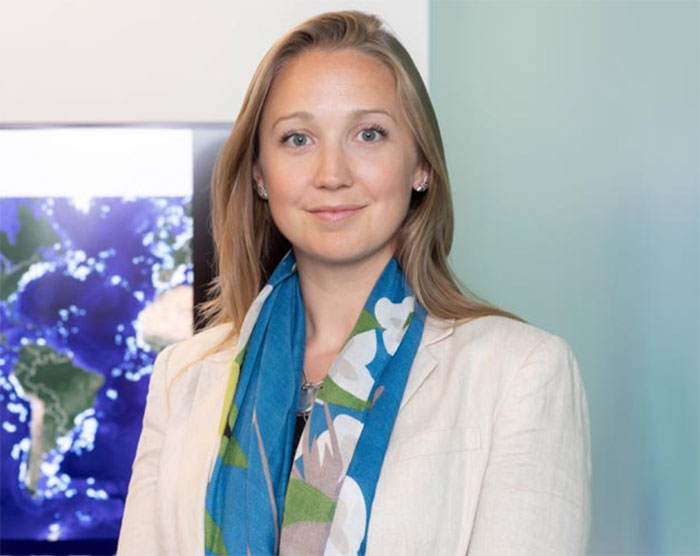
Harriet Harden-Davies is the corresponding author for this commentary in the Marine Technology Society Journal. The article discusses how The Ocean Decade is a critical chance to move toward a sustainable and equitable ocean. Realizing this vision requires that we all recognize inequities, learn from failure, listen to the diverse voices of people who rely on the ocean for their lives and livelihoods, and value their expertise.
Giron-Nava, A., and H. Harden-Davies, 2021. Published online: February, 2022. Oceanography 35(1):76–80, DOI: https://doi.org/10.5670/oceanog.2021.402.
The year 2021 marked the beginning of the United Nations (UN) Decade of Ocean Science for Sustainable Development. The world now has fewer than 10 years to achieve the UN Sustainable Development Goals. In this article, we reflect on some of the challenges and opportunities this presents for Early Career Ocean Professionals (ECOPs) who will be instrumental in designing, delivering, and using ocean knowledge toward a more sustainable and equitable future. How can Ocean Decade programs and partnerships equip ECOPs with the necessary tools, skills, and opportunities to engage meaningfully with policy processes and to develop practical solutions for societal benefit? We propose some key questions for discussion among ocean scientists, ocean-dependent communities, and policymakers.
J. Van Stavel et al., “Towards an increase in Diversity, Equity and Inclusion in international ocean observing practices and initiatives,” OCEANS 2021: San Diego – Porto, 2021, pp. 1-6, https://doi: 10.23919/OCEANS44145.2021.9706081
We discuss how the (IOC-UNESCO) Ocean Best Practices System has implemented and is building on actions and solutions proposed by others to support the ocean observing community in increasing diversity, equity, and inclusivity. Our contribution highlights the need for self-assessment which can be transformed into action and foster the collaborative culture required for international ocean observing practices and initiatives. This urgent process aims to address historical problems that need immediate attention in to ensure progress in sustainable development and the advancement of ocean observing everywhere.

Taylor Goelz, Jonatha Giddens, Alfredo Giron, Harriet Harden-Davies, Evgeniia Kostianaia, Guillermo Ortuno Crespo, Erin Satterwaite, Edward Senkondo, and the membership of the former ECOP Internal Working Group reveal how the ECOP Programme began and its focus for the future in an article for ECO Magazine.
Today, the world’s oceans are faced with threats at every turn – accelerating climate change, loss of marine biodiversity, and expanding resource extraction, including deep-sea mining, and more. These all come at a time when humanity’s dependence on the ocean for food and job security is higher than ever before.
The United Nations Decade of Ocean Science for Sustainable Development – known as the UN Ocean Decade – began in 2021 and aims to ensure ocean sustainability into the future. This vision demands collaborative action across sectors, disciplines, nations, communities, and generations. Its success relies on the inclusion of a diverse array of voices that represent current and future ocean leaders. As emerging ocean leaders, early-career ocean professionals will play a key role in designing and executing the inclusive ocean knowledge needed to achieve success.
Alfredo Giron-Nava didn’t spot many peers at the inaugural meeting of the United Nations Decade of Ocean Sciences for Sustainable Development.
The postdoctoral researcher was one of only six junior scientists at the event, held in Copenhagen in May 2019. Four of them began discussions on how to boost the representation of junior scientists in the initiative, which sets global research priorities for ocean sciences.
After they persuaded organizers to give them a concluding talk slot, Giron-Nava, now a fisheries researcher at Stanford University in California, told the meeting, “It’s important to have early-career researchers who, at the end of the decade, will feel ownership and leadership of the objectives we are deciding here.”
Alfredo Giron, PhD, is a Mexico City native, current UC Santa Barbara post-doc, UNESCO Intergovernmental Oceanographic Commission (IOC) co-chair for the Early Career Ocean Professionals (ECOP) working group, and overall fisheries enthusiast. ECO interviewed Giron to gain his perspective on the interface of ocean science and fisheries and how his work ties into the Decade’s overarching goals.
Accurate fisheries statistics and models are often hard to come by and fisheries management suffers as a result. Giron’s approach to fisheries work boldly embodies the Decade’s motto “the Science we need for the ocean we want” and emphasizes the need for multi-disciplinary work.
Giron’s own PhD analyzed fisheries in the Gulf of California, where oversimplified models have long been used to calculate Mexican sardine statistics. Giron’s response to this? ‘I think we can do better. It’s a problem all over the world. How do we move from relationships that we assume to be true to studying interactions in the real world and with real data?’
It’s a fair response. But just how do we do this?

Erin Satterthwaite and Alfredo Giron-Nava discuss their rationale behind forming the Informal Working Group of ECOPs, which has now evolved into the official, endorsed ECOP Programme.
Earlier this year, we had the amazing opportunity to attend the first planning meeting for the UN Decade of Ocean Science for Sustainable Development, an intergovernmental framework to align the visions of the global ocean community and develop shared goals on the path toward sustainability. During this meeting, we noticed that the room was filled with mostly senior and mid-career people. We found ourselves asking, how can we have hope that the Ocean Decade’s goals will be met if we don’t include and empower self-identified early career professionals?
ECOP Programme co-founder Alfredo Giron-Nava talks about the legacy of Walter Munk and how being a proud recipient of the Walter Munk Scholar Award has enabled him the opportunity to voice his perspective as an ECOP, and request more inclusion in the implementation of the Decade of Ocean Science.
Walter Munk, one of history’s greatest oceanographers, frequently mentioned his fear that young researchers are no longer pursuing high-risk, high-reward projects. Driven by competition for limited funding, strict career expectations, and apparent lack of encouragement, daring research projects led by younger researchers seemed to him to be on the fringe of extinction. But why was Walter particularly interested in these types of projects? What can we learn from his professional career that might inspire our generation to pursue such risky ideas?
Share Your Publications with Us!
Fill out the form and share your work that has been recently published with ECOPs: